


How to Use Turmeric Powder to Lighten Skin Safely
When it comes to using turmeric powder to lighten skin, set yourself up for success first. Turmeric can’t remove your natural skin tone and there is little evidence that a natural mask will remove dark spots overnight. For some, however, it could help soothe irritated and dull skin to appear calmer and even. Any real fading of excess pigment will probably be slow, gradual and less consistently produced than with tried and tested skin care treatments.
The best way to use it is to apply a small amount, dilute with a very light base, test in a small spot and wear it on for a limited period. Never use it in combination with lemon juice, baking soda, undiluted apple cider vinegar or bleach. Those additions are irritating to the skin, and skin irritation can leave deeper marks.
Important: This article provides general skincare information, not medical advice. If pigmentation is new, changing, widespread, painful, itchy, or resistant to basic care, ask a dermatologist to identify the cause before trying to lighten it.
Can Turmeric Powder Really Lighten Skin?
Turmeric contains curcumin, a yellow plant compound studied for antioxidant and anti-inflammatory activity. A systematic review of clinical research on turmeric and skin health found promising results across several skin concerns, but the included studies used different oral and topical preparations. They did not establish ordinary kitchen turmeric as a reliable treatment for facial hyperpigmentation.
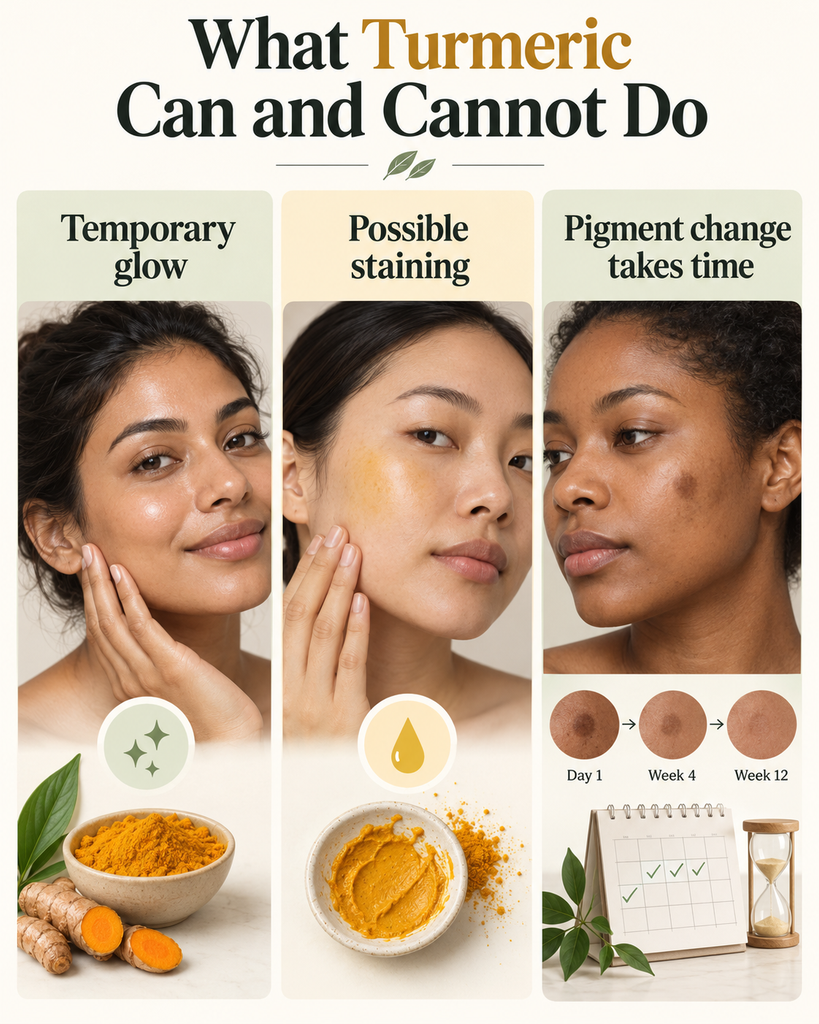
That distinction matters. “Brighter” skin can mean less redness, a smoother hydrated surface, or the temporary removal of dull buildup. “Lightening” usually means reducing excess melanin in a dark spot. Those outcomes are not interchangeable, and a yellow turmeric stain can sometimes create the illusion that your tone changed when only pigment from the spice remains on the surface.
Turmeric is best treated as an optional cosmetic mask, not as a cure for melasma, acne marks, sun spots, or an underlying skin condition. If your goal is to fade a defined patch of hyperpigmentation, daily sun protection and a well-formulated treatment have more dependable evidence.
How to Use Turmeric Powder to Lighten Skin: A Gentle Method
There is no clinically proven DIY turmeric-mask recipe or ideal concentration for lightening skin. The method below therefore uses a deliberately small amount and a short contact time. If your skin is sensitive, reactive, affected by eczema, or currently irritated, I would skip the homemade mask and choose a fragrance-free product formulated for facial use instead.
What you need
- 1 tablespoon plain, unsweetened yogurt
- 1/8 teaspoon plain turmeric powder
- A clean small bowl and spoon
- A clean, soft applicator or washed fingertips
- A dark or old towel that can be stained
Yogurt makes the powder easier to spread and rinse away. Do not use it if you have reacted to dairy on your skin. A plain colloidal-oatmeal paste made with water is a gentler alternative, although any ingredient can cause a reaction in a susceptible person.
Step-by-step instructions
- Patch test the mixture. Apply a small amount to a discreet area such as the inner arm. Leave it for five minutes, rinse, and watch the area for redness, swelling, itching, or burning. Because delayed reactions can occur, wait several days before putting it on your face. The American Academy of Dermatology’s at-home product-testing guidance uses repeated application for seven to 10 days to help reveal reactions to a new skincare product; a single quick test cannot guarantee that you will tolerate a DIY mixture.
- Cleanse gently. Wash your face with a mild cleanser and lukewarm water, then pat it dry. Do not scrub or use an exfoliating brush first.
- Mix a thin paste. Combine the yogurt and turmeric until the color is even. More turmeric is not better; it mainly raises the chance of staining and irritation.
- Apply a light layer. Keep the mixture away from your eyelids, lips, nostrils, hairline, broken skin, and active rash. Wash your hands after applying it.
- Wait five minutes the first time. If your skin remains comfortable, a later application can stay on for up to 10 minutes. Do not wait for the mask to become hard, and do not leave it on overnight.
- Rinse without scrubbing. Loosen the paste with lukewarm water and remove it gently. A mild cleanser can help lift remaining yellow residue.
- Moisturize and protect. Apply a fragrance-free moisturizer. During the day, finish with broad-spectrum SPF 30 or higher, especially if dark spots are your concern.
Try the mask no more than once a week at first. Stop if it causes persistent tingling, burning, itching, swelling, a rash, or worsening discoloration. A recipe that irritates your face is working against your goal, even if it is popular online.

How Fast Does Turmeric Lighten the Skin?
It’s important to remember that turmeric is not a skin lightening agent; it cannot do so following just one use. Your face might appear brighter for a short while after washing it, due to its moisture, freshness, or the decrease in redness, but this is not the equivalent of diminishing melanin. There is no evidence to back up any overnight change in pigmentation using turmeric.
When a dark mark really fades, it typically takes weeks or months to make the difference—pigment is actually being generated and eliminated through biological mechanisms, rather than just being washed off. The length of time will vary depending on the cause and severity of the pigmentation, the skin tone, sun exposure, inflammation and the treatment applied. Each condition—melasma, post-acne marks, freckles and yellow turmeric stain—has different characteristics.
Photograph in the same natural light before you begin and re-photograph no more than once every two to four weeks. Monitoring the mirror every day can be easily affected by the lighting conditions and cause overuse of the mask. After about 8 weeks of mild yet consistent treatment, if no improvement occurs, or if the area gets worse, a dermatologist can help you select a treatment that will work with the diagnosis.
Does Turmeric Bleach Skin?
No. Turmeric is not like bleach and household bleach should never be used on the skin. Turmeric also will not be able to safely alter the genetically inherited skin tone over the entire face or body.
Turmeric could help to give skin a more uniform appearance or help to minimize the appearance of inflammation in some formulas. It does not lighten people several shades of white, lighten everyone’s skin, or whiten skin permanently; these claims have not been confirmed by good clinical evidence. An aim to be healthy is to treat the excess pigmentation without causing changes in your natural skin colour.
Can You Put Turmeric Powder Directly on Your Skin?
You can develop irritation or allergy from direct contact, so I do not recommend rubbing dry powder onto your face. A published dermatology review identifies curcumin as a contact allergen, and the FDA notes that cosmetic ingredients can trigger allergic reactions. “Natural” does not mean reaction-proof.
Dry powder is also gritty and can be unpleasantly abrasive when rubbed. Mixing a very small quantity into a soft base reduces friction and makes an even, short application easier, but it does not eliminate the risk of dermatitis. Never place turmeric on an open wound, sunburn, active eczema flare, or already inflamed skin.

Which Turmeric Powder Is Best for Skin Brightening?
The option that is safest is often generally not loose powder. It’s a genuine facial product that contains turmeric or curcumin in a finished formulation; has a full ingredient list; simple directions and packaging that keeps the product from contamination. The formulation is important because curcumin is not easily soluble in water and a professional formulation can help to regulate the texture, concentration, preservation and skin contact of the end product much better than a recipe in the kitchen.
Alternatively, if you still want a powder mask, make sure to get a new single ingredient turmeric powder from a trusted vendor. Try not to use curry powder, seasonings, or anything that may contain more than one fragrance or unclear colorant, or anything that is not labeled or can’t find the manufacturer for. The words ‘organic’, ‘natural’, ‘wild’ or ‘cosmetic grade’ do not guarantee that a product will be suitable for your skin.
| What to check | Better choice | What to avoid |
|---|---|---|
| Ingredient list | Turmeric as the only ingredient | Curry or spice blends |
| Label | Named manufacturer and clear packaging | Unlabeled loose powder |
| Condition | Dry, sealed, within its date | Damp, clumped, or oddly scented powder |
| Skin use | Tiny amount in a patch-tested mixture | Dry rubbing or a thick concentrated paste |
| Expectations | Modest brightening support | “Instant whitening” or permanent color change claims |
If you are new to skincare ingredients, the bigger routine matters more than finding a special variety of turmeric. StoryPrior’s beginner comparison of Nivea and Garnier skincare explains why skin type and the individual formula are more useful than choosing by brand name alone. Anyone prone to reactions may also find the site’s guide to gentle creams for sensitive skin helpful when selecting a moisturizer to use afterward.
Ingredients You Should Not Mix With Turmeric
Certain popular DIY additions actually can pose more risk than benefit. Lemon juice has the acidity and variability, undiluted vinegar may sting or burn an already irritated surface, gritty sugar or salt may cause further irritation to an already irritated surface. Facial masks should not contain toothpaste, hydrogen peroxide or household bleach.
Do not use the turmeric mask in the same treatment as retinol, benzoyl peroxide, high strength vitamin C, alpha hydroxy acids, beta hydroxy acids, peels, scrubs, or hair removal products. When a series of irritating steps are combined, it is more difficult to determine the source of a reaction. Stay simple and clear on mask day: gentle cleanser, simple moisturizer, and sunscreen.
What about the side effect of staining face yellow with turmeric?
Never use a scrubber to remove the stain. Rinse first with lukewarm water and then cleanse and moisturize with mild facial cleanser. The remaining tint should begin to dissipate as a result of regular cleaning, but this is dependent on the tint.
Similar to other facial products, using a heavy oil can remove pigment from certain skin types, while not being a good choice for all faces, particularly for acne-prone skin. If you are using an oil that you already use and are comfortable with, follow the instructions and be sure to rinse it off. Keep pale towels, grout, counters, clothes and hair safe as turmeric stains them harder than it stains skin.

Side Effects of Applying Turmeric on the Face
The most common practical problem is temporary yellow staining, but irritation matters more. Possible signs include burning, redness, itching, swelling, dryness, small bumps, or a rash. An allergic reaction may occur even if you have eaten turmeric without a problem because skin exposure and food exposure are not identical.
Rinse the mask off immediately if it burns or becomes uncomfortable. Stop using it and keep your routine gentle until the skin settles. Seek urgent care for trouble breathing, facial or throat swelling, faintness, or rapidly spreading hives; contact a clinician for blistering, severe pain, eye exposure that does not improve after thorough rinsing, or a persistent rash.
I would avoid DIY turmeric masks altogether if you have an active dermatitis flare, broken skin, a known turmeric or curcumin allergy, or a history of strong reactions to botanical products. A dermatologist may also advise against experimentation while you are using prescription acne or pigmentation treatment.
The Part That Matters Most: Daily Sun Protection
If your concern is dark spots, a weekly mask cannot compensate for daily ultraviolet exposure. Sunlight stimulates pigment and can darken existing patches; the American Academy of Dermatology’s melasma guidance recommends broad-spectrum SPF 30 or higher along with shade and protective clothing. Apply enough sunscreen to exposed skin and reapply as the label directs, especially outdoors, after swimming, or after sweating.
For melasma or stubborn facial discoloration, tinted sunscreen containing iron oxides may also help protect against visible light. Choose a sunscreen you can wear consistently without irritation. This daily step is far more important for preventing new darkening than adding extra turmeric to a mask.

Better-Supported Options for Dark Spots
Before treating a dark area, work out what it is. Post-acne marks, melasma, freckles, medication-related pigmentation, irritation, and certain medical conditions need different approaches. Hyperpigmentation describes areas that are darker than the surrounding skin, but it is a description rather than one single diagnosis.
Depending on the cause and your skin, a clinician may suggest ingredients such as azelaic acid, retinoids, hydroquinone, kojic acid, vitamin C, niacinamide, or tranexamic acid. These products differ in strength, evidence, pregnancy considerations, and irritation risk. Do not start several at once, and get professional advice before using prescription lighteners or trying to treat large areas.
| Goal | Sensible first step | When to seek help |
|---|---|---|
| Prevent spots from darkening | Broad-spectrum SPF 30+ every day | Pigmentation continues despite consistent protection |
| Fade a post-acne mark | Control acne gently and consider a formulated pigment treatment | Acne is scarring, painful, or persistent |
| Manage symmetrical facial patches | Use sun protection and request a diagnosis | Melasma is suspected or patches are spreading |
| Calm dull or mildly irritated-looking skin | Simplify the routine and moisturize | Burning, itching, scaling, or rash persists |
| Try turmeric | Patch test and use briefly once weekly | Any reaction occurs or no progress after consistent care |
Common Errors to be Avoided
The first error is to go for a quick fix. The longer the powder is on, the more powder is used, and the more often the mask is applied, the more likely it is to cause health problems, but not necessarily more effective. The second is the cosmetic approach to every dark patch rather than its cause.
Common mistakes include forgetting to do the patch test, wiping the yellow residue, putting on the turmeric directly after scrubbing, forgetting to put on sunscreen and believing that if the turmeric feels hot, that is because it is active. Burning is a warning sign, not evidence of brightening. Another thing I would not skip is giving my skin a break when I feel my skin is irritated; when it’s inflamed, it’ll be easier to manage the pigmentation.
Frequently Asked Questions
What is the rate of turmeric whitening skin?
Turmeric doesn’t always give an instant glow to skin, and one-time glaze is not pigment fading. In case it helps to regulate uneven tone, you should see a slight improvement in a few weeks and not hours, and get the same sun protection every time.
Can turmeric powder lighten my skin?
It may make dull or inflamed skin look brighter for some people, but evidence for loose turmeric powder as a true lightening treatment is limited. It will not safely change your natural skin color or bleach the skin.
Can I put turmeric powder directly on my skin?
Do not rub dry turmeric powder directly onto your face. Mix only a small amount into a gentle base, patch test it first, avoid broken or irritated skin, and rinse it off promptly if you feel discomfort.
Which turmeric powder is best for skin whitening?
No turmeric powder is proven to whiten skin. If you use one, choose a fresh, single-ingredient product from a traceable manufacturer, or preferably choose a finished facial formula with a complete ingredient list and clear directions.
How do I use turmeric for skin whitening overnight?
Do not leave turmeric on overnight. Prolonged contact increases staining and may increase irritation; use a thin, patch-tested mask for five to 10 minutes instead, then rinse and moisturize.
Conclusion
The careful answer to how to use turmeric powder to lighten skin is to use very little, dilute it in a gentle base, patch test repeatedly, keep the first facial application to five minutes, and use it no more than once weekly at the start. Avoid harsh DIY additions and remember that turmeric cannot bleach your natural color or deliver reliable overnight fading.
For stubborn dark spots, make broad-spectrum sunscreen the foundation of your routine and ask a dermatologist about treatments suited to the cause. If you try the gentle mask, record how your skin responds rather than increasing the strength. Your skin barrier is worth protecting, even when the slower approach feels less exciting.