


How to Avoid Skin Dryness in Winter
Cold air outside and heated air indoors can leave skin feeling tight, itchy, rough, or flaky. To avoid skin dryness in winter, start with three changes: use warm rather than hot water, apply a fragrance-free cream while your skin is still slightly damp, and reduce products that sting or strip oil from your skin.
No ten-step routine or expensive collection is required. Most people will find more relief from a few gentle habits that are done regularly. This guide will tell you what to do for your face, hands, lips and body, how to select a moisturizer and when dryness is a medical concern.
Why Skin Becomes Drier in Winter
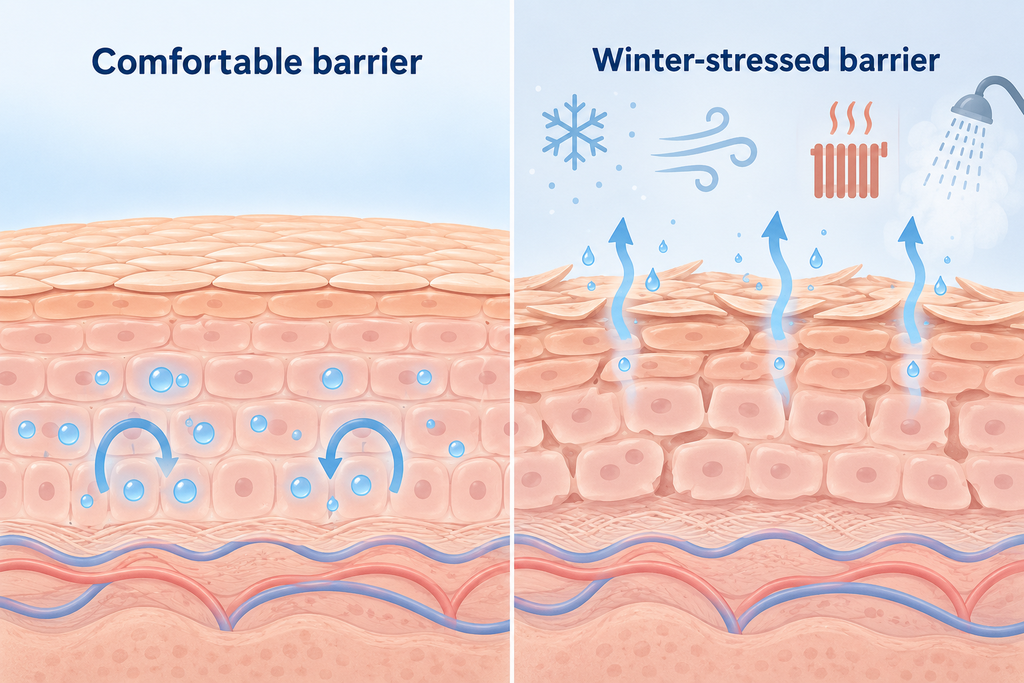
The outermost layer of the skin acts as a barrier, helping to reduce water loss and keeping out irritants; however, cold weather, low humidity, indoor heating, wind, frequent handwashing and long hot showers can cause it to become less effective, which in turn may result in dullness, fine flaking, itching, a tight feeling or small cracks.
Dry skin is different from dehydrated skin since dry skin produces less oil while dehydrated skin refers to skin that is deficient in water and this condition can also have a temporary effect on oily or combination skin. Although both types of skin can tend to be tightening, it’s advisable to start by using a gentle cleanser and a moisturizer that absorbs and retains water.
There are some who require additional care during the winter months. As skin ages, it becomes drier, and eczema, psoriasis, diabetes, thyroid disease, some medications, and occupations that involve repeated exposure to water or chemicals can make skin drier. Do not assume that weather is the only cause if the problem is new, severe, or if basic care is not working.
How to Avoid Skin Dryness in Winter: 12 Practical Steps
1. Keep showers short and warm, not hot
A steaming shower feels good on a cold morning, but prolonged hot water can remove surface oils and leave skin tighter afterward. The American Academy of Dermatology recommends five- to ten-minute baths or showers, followed by gentle patting rather than vigorous towel rubbing.
If the mirror is excessively misty and your skin is red when you have come out, then reduce the temperature; cold water is not needed, warm water will do.
2. Clean only as much as necessary
When using a cleanser, choose one that is mild and without fragrance, in particular when cleaning your face and other dry areas. With regard to the body, apply the cleanser only to the areas that actually require it such as the underarms, the groin, the feet, or any skin that is obviously dirty rather than making a thick lather all the way from the neck to the ankles every day.
The fact that a product leaves foam does not mean that it is a better cleanser; if your skin squeaks, stings, or feels tight right after washing, then the cleanser, the water temperature, the frequency, or all of these factors might be too harsh.
3. Moisturize while skin is slightly damp
After washing, pat off excess water and apply moisturizer before your skin becomes completely dry. This is sometimes called the “soak and seal” approach because the moisturizer slows the loss of water left on the skin. The National Eczema Association’s moisturizing guidance recommends applying moisturizer promptly after bathing and after handwashing, especially for eczema-prone skin.
Put moisturizer where the habit occurs: next to the sink, near the shower, and in your purse. A good product after washing is more useful than a fancy jar that you don’t use often.
4. Choose a cream or ointment for very dry areas
Lotions are light and easy to apply, whereas creams and ointments contain more oil and are more effective at reducing water loss. It is possible to use a lotion during the day when dealing with mild dryness and a thicker cream at night for either the face or the body. In some cases, if you are able to tolerate the consistency, an ointment such as white petrolatum might be of help on small, extremely dry areas.
The table given below should be regarded as a practical starting point not a fixed rule
| Texture | Best suited to | Main tradeoff |
|---|---|---|
| Lotion | Mild dryness, hairy areas, daytime use | Light but may not be enough for cracked skin |
| Cream | Dry face or body, regular winter care | More protective but slightly heavier |
| Ointment | Very dry hands, heels, elbows, and lips | Strong sealing effect but feels greasier |
5. Look for useful ingredient groups
Humectants, emollients and occlusives are all components of a balanced moisturizer. Humectants like glycerin, hyaluronic acid and urea bind water, emollients soften the gaps between skin cells, and occlusives like petrolatum, mineral oil and dimethicone reduce water loss.
Lipids that are naturally present in the skin barrier, ceramides are used in barrier supporting creams. Not all ingredients are required in a single product and a simple formula that you can tolerate is often the best option.

6. Prefer fragrance-free products when skin is reactive
Although fragrance may be pleasant, it can also be a source of irritation or an allergen. When choosing products, it is better to look for those that are fragrance-free rather than unscented since unscented does not mean that there are no fragrance-related ingredients.
If your skin reacts easily, introduce only one new item at a time and patch-test it on a small area. The product itself matters more than the brand name; this comparison of NIVEA and Aveeno for sensitive skin explains why checking individual formulas is more useful than assuming an entire brand is gentle.
7. Pause unnecessary actives when skin stings
When the skin barrier is already irritated, retinoids, exfoliating acids, benzoyl peroxide, strong vitamin C formulations, scrubs, and toners containing a high amount of alcohol can seem more harsh. If your normal routine suddenly causes a burning sensation, then temporarily simplify it to consist of a mild cleanser, a moisturizer, and a daytime sunscreen, unless a doctor has instructed you to keep going with a prescribed treatment.
Restart optional active products slowly after the skin feels comfortable. Adding several treatments at once makes it difficult to identify which one caused a problem.
8. Protect exposed skin from cold and wind
Wear soft gloves outdoors and use waterproof gloves for wet work such as dishwashing. A scarf can reduce wind exposure around the lower face, but rough wool rubbing directly against irritated skin may make itching worse. Choose a soft inner layer if needed.
Reapply hand cream after washing because soap, sanitizer, water, and towel friction repeatedly remove the protective layer. At bedtime, apply a thicker cream or ointment and consider soft cotton gloves if they help you keep the product in place.
9. Use a humidifier carefully
A humidifier may help when indoor heating makes the air uncomfortably dry, but more humidity is not always better. The Environmental Protection Agency advises keeping indoor relative humidity between 30% and 50% to balance comfort with the risk of excess moisture and mold.
Use a hygrometer rather than guessing, and follow the manufacturer’s directions. The CDC recommends emptying portable humidifiers daily, cleaning them regularly, allowing them to air-dry, and using the recommended water because poorly maintained devices can spread germs in mist.

10. Continue sun protection in winter
Cold temperatures do not switch off ultraviolet radiation. Apply a broad-spectrum sunscreen to exposed skin as the final step of your morning routine, especially when spending time outdoors or around reflective snow. The FDA’s sun-safety guidance also stresses shade, protective clothing, and sunglasses because sunscreen is only one part of protection.
Many dermatologists suggest using a broad-spectrum sunscreen with an SPF of 30 or higher as part of a simple daily routine; you should select one that is moisturizing and that you can apply easily, then adhere to the instructions on the label regarding quantity, timing, and the need to reapply.
11. Treat the face, hands, lips, and body differently
One moisturizer does not have to work everywhere. Your face may prefer a non-comedogenic cream, your hands may need frequent reapplication, your shins may need a richer body cream, and your lips may tolerate plain petrolatum better than a flavored balm.
Beginners can keep the routine simple while still matching products to the area. If you are deciding where a rich cream fits, this beginner comparison of NIVEA and Garnier skincare offers a useful reminder to choose by function, skin type, and formula rather than buying a full matching set.
12. Stop scratching and address the itch
Scratching creates more barrier damage and can turn mild dryness into raw or bleeding skin. Apply a cool compress, moisturize again, keep nails short, and choose soft, breathable clothing while the area settles.
Persistent itch may be eczema, contact dermatitis, psoriasis, an infection, or another condition rather than simple seasonal dryness. If moisturization does not help, get the cause assessed instead of repeatedly exfoliating the area.
A Simple Winter Routine for Dry Skin
A routine that is effective ought to be easy to repeat; use the structure listed below and then modify the texture or how often you carry it out according to your skin’s reaction.
| Time | Face | Body, hands, and lips |
|---|---|---|
| Morning | Rinse or cleanse gently, moisturize, apply broad-spectrum SPF 30+ | Apply cream to dry areas; use lip balm and hand cream |
| After washing | Reapply moisturizer if skin feels tight | Apply hand or body cream while skin is slightly damp |
| Evening | Cleanse gently, pause irritating actives if needed, use a richer moisturizer | Apply cream; add ointment to very dry spots if tolerated |
Give the simplified routine several days of consistent use before adding optional serums or exfoliants. If a new product burns, causes swelling, or produces an itchy rash, stop using it rather than trying to “push through.”

Common Winter Skincare Mistakes
The biggest error is to delay changing your routine until the skin has cracked. It’s simpler to apply a moisturizer right after bathing and after washing your hands than it is to try to soothe a severely damaged barrier later on.
Other habits that can quietly worsen dryness include:
- Taking long, very hot showers
- Scrubbing flakes with a rough cloth or body scrub
- Using fragranced soap over the entire body
- Applying only a light lotion to severely dry or cracked areas
- Starting multiple strong active products together
- Running an unclean humidifier or allowing indoor humidity to become excessive
- Ignoring a rash because it appeared during winter
Just because something is natural doesn’t mean that it is gentle; lemon juice, baking soda, undiluted essential oils, and strong homemade exfoliants can cause irritation in skin that is already dry, whereas coconut or other plant oils might not be suitable for every person’s face, so I would begin by using a simple, fragrance-free moisturizer before trying out a do-it-yourself treatment.
When to See a Dermatologist
Ordinary winter dryness should begin to improve with gentler washing and regular moisturizing. Arrange medical care if the problem persists despite these changes, repeatedly interrupts sleep, covers a large area, or is accompanied by a spreading rash.
Seek prompt advice for deep painful cracks, bleeding, significant swelling, warmth, pus, fluid, or yellow crusting. The AAD lists cracks, bleeding, pain, and signs of infection among features of excessively dry skin that may need professional help.

Frequently Asked Questions
How can I treat dry skin in winter at home?
Have short showers using warm water, wash with a mild fragrance-free cleanser and then apply a cream or ointment while the skin is still a bit damp. Less rubbing and fewer products with irritating active ingredients should be used, exposure of the skin to the wind should be avoided, and the moisturizer should be reapplied after washing your hands.
How can I avoid dry skin in winter naturally?
The most useful of the non-product changes involve reducing the temperature of the shower, cutting down on the length of the bath, covering the skin with soft clothing, and maintaining indoor humidity at a safe level. Although “natural” oils are optional rather than essential, they may still lead to irritation or breakouts, so you should carry out a patch test on them and avoid using kitchen acids or rough scrubs.
How do I treat dry winter skin on my face?
Once a day or as and when necessary, use a mild facial cleanser, then apply a cream that is free from fragrance and not comedogenic and use a daytime sunscreen. If your face starts to burn or peel, stop using the optional exfoliants and retinoids until it has recovered, unless your prescriber has instructed you to do otherwise.
Why is my face dry during winter even after moisturizing?
The moisturizer may be too light, you may be applying it after the skin is fully dry, or another part of the routine may be stripping the barrier. Hot water, foaming cleansers, fragrance, retinoids, exfoliating acids, and low indoor humidity are common factors worth checking one at a time.
Is lotion or cream better for winter care for dry skin?
For dry winter skin a cream is usually a better choice since it is more rich and provides better protection against water loss than a light lotion; ointment might be more effective on extremely dry hands, heels, elbows, or lips, while lotion will still be suitable for mild dryness or for use during the day.
Does drinking more water fix winter dry skin?
While proper hydration is important for general health, consuming additional water won’t take the place of topical care when cold air, hot showers, and indoor heating are damaging the skin barrier. It is usually better to moisturize damp skin and change those external factors.
How long should winter dry skin take to improve?
After a few days of carrying on with careful and gentle treatment, the mild dryness might start to seem more comfortable, but the exact time it takes will depend on the reason and how severe it is. However, if it continues to get worse, comes back soon after, or fails to improve even with a simple routine, you should see a dermatologist to make sure it’s not eczema, an allergy, an infection, or some other medical condition.
Conclusion
Learning how to avoid skin dryness in winter is less about adding products and more about protecting the barrier you already have. Short warm showers, a mild cleanser, prompt moisturizing, suitable humidity, protective clothing, and fewer irritating actives form a practical routine for most people.
Begin by altering the habit that has the greatest effect on you, such as reducing the temperature of the shower or putting hand cream next to the sink. However, if cracks, pain, bleeding, signs of infection, or continuous itching occur, you should arrange to see a qualified dermatologist rather than depending on some other home remedy.