


The Best Fringe for Heart-Shaped Face: A Complete Styling Guide
If you are searching for the right fringe for heart-shaped face proportions, here is the short answer first. The most reliably flattering options are curtain bangs, side-swept bangs and soft wispy or piecey bangs, because all three add width lower down the face and break up a wider forehead without creating a heavy horizontal line. The styles that ask for more care are blunt, dense, micro or straight-across bangs, which tend to emphasise the widest part of your face rather than soften it.
That said, “flattering” is a guideline, not a rule. Plenty of people with heart-shaped faces wear blunt bangs beautifully because their hair texture, density and hairline cooperate. In this guide, I will walk you through how to confirm your face shape, which fringe shapes do what, how texture changes the outcome, exactly what to ask for at the salon, and what maintenance really costs in time and money.
How to Confirm You Actually Have a Heart-Shaped Face
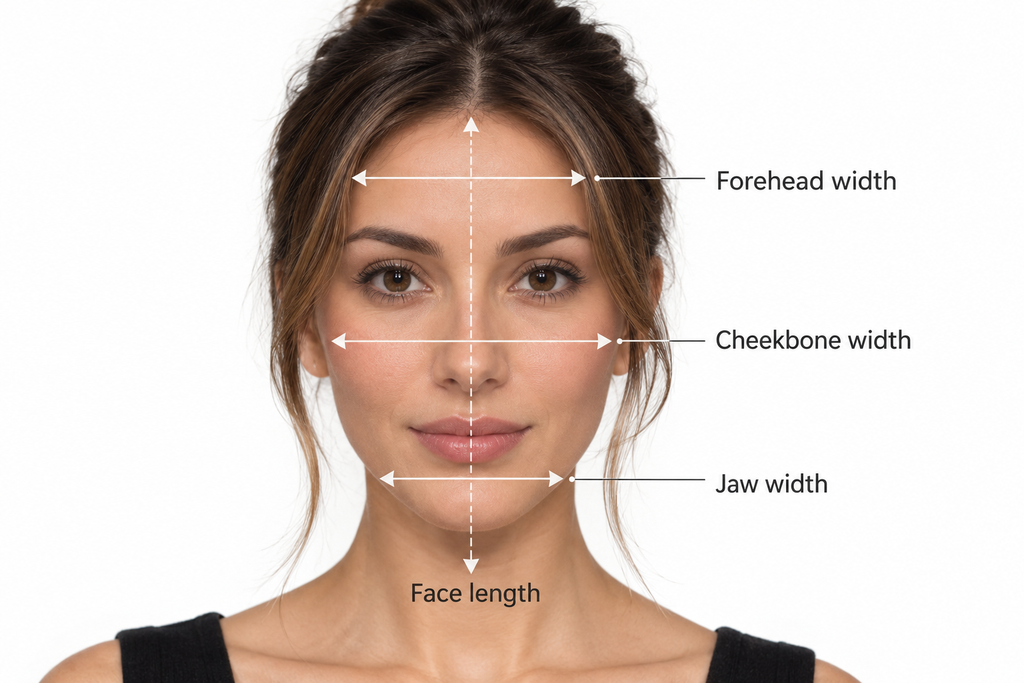
Most people guess their face shape from a quick mirror check and get it wrong. A heart-shaped face is widest at the forehead and temples, often has visible cheekbones, and narrows to a smaller, slightly pointed chin. The outline tapers downward, which is where the “heart” name comes from.
Here is a simple way to check it yourself in about three minutes:
- Pull all your hair back flat and stand square to a mirror in even light.
- Measure the width of your forehead at its widest point, then your cheekbones, then your jaw just below the ears.
- Measure your face length from hairline to the bottom of your chin.
- Compare the three widths. If the forehead is the largest number, the cheekbones are close behind, and the jaw is clearly the smallest, you are looking at a heart shape.
- Look at your chin in profile. A heart shape usually comes to a narrower point rather than a flat, squared base.
Two features often travel with this shape. Many people have a widow’s peak, the V-shaped dip at the centre of the hairline, which dermatology literature describes as a normal morphogenetic variant of the hairline rather than a problem. A cowlick at the front hairline is also common, and it matters more for fringe planning than almost anything else.
Why a Fringe Works So Well on This Face Shape
The whole goal with a heart shape is balance. Your forehead is the widest zone, and your chin is the narrowest, so anything that visually shortens or breaks up the forehead while adding softness and width near the jaw will read as more proportional. A fringe does the first job directly by covering part of the forehead, and the right length does the second job by drawing the eye down toward the cheekbones and jaw.
Length is the single most important variable. Bangs that end around the cheekbone or below create a diagonal or vertical line that pulls attention downward. Bangs that stop high and flat across the brow do the opposite and can widen the top half of the face.
Weight is the second variable. A dense, solid curtain of hair sitting on the forehead creates a hard edge, while a softened, point-cut or feathered edge lets skin show through and keeps the whole thing light. This is why two people can ask for “bangs” and get completely different results from the same length.
Best Fringe for Heart Shaped Face: The Styles That Work
Curtain Bangs
Curtain bangs part in the centre or slightly off-centre and sweep to either side, usually landing somewhere between the cheekbone and the jaw. They are the safest starting point because they frame rather than cover, and the open centre stops the forehead from looking blocked off. If you already wear a middle part, this is the smallest possible leap.
Curtain bangs for heart-shaped face proportions also solve the widow’s peak problem neatly. The natural split sits exactly where the peak and cowlick want to separate anyway, so you are working with your hair growth instead of fighting it.
Side-Swept Bangs
A side-swept fringe crosses the forehead diagonally from a deep side part. That diagonal is useful because it interrupts the horizontal width of the forehead and creates a little asymmetry, which reads as softer. It blends easily into layers, lobs and long hair.
One caveat worth knowing: side-swept bangs need a bit of body to sit properly. On very fine hair, they can separate into strands and look stringy by midday, so a light root powder or a quick blast with a round brush is usually part of the deal.
Wispy or Piecey Bangs
These sit around brow level but are cut with separation built in, so you see skin through them. They give you the fringe effect without the solid mass, which is why stylists recommend them so often for wider foreheads. They also suit people who want to test bangs without a dramatic commitment.
The trade-off is precision. Wispy bangs look intentional when the separation is cut in properly and look grown-out when it is not, so this style depends more on the stylist’s texturising skill than most.
Crescent and Long Rounded Bangs
A crescent fringe is shortest in the centre and gets gradually longer at the outer corners, curving around the face. That longer edge is doing real work for a heart shape because it adds a soft frame beside the cheekbones and carries the eye toward the jaw.
Long Textured Full Bangs
You can absolutely wear a fuller fringe. The rule I would follow is to keep it long, ideally at or just below the lash line, and heavily texturised at the ends so the bottom edge is broken rather than straight. The length adds weight that helps flatten a cowlick, and the texture stops the forehead from looking wider.
| Fringe style | Best for | Upkeep level | Watch out for |
|---|---|---|---|
| Curtain bangs | Most hair types, centre parts, widow’s peaks | Low to medium | Can lose shape if cut too short at the centre |
| Side-swept | Medium to thick hair, deep side parts | Medium | Looks stringy on very fine hair |
| Wispy or piecey | Fine hair, first-time fringe wearers | Medium | Needs skilled texturising to stay intentional |
| Crescent | Prominent cheekbones, wider foreheads | Medium | Too short in the centre unbalances the curve |
| Long textured full | Thick hair, strong cowlicks | High | Must stay long, or forehead width is emphasised |

Fringe Styles That Need Extra Caution
None of these is forbidden. They simply need adjustments, and going in aware saves you a regrettable appointment.
- Micro bangs: Very short bangs expose most of the forehead, which highlights the widest part of the face. If you love the look, ask for a slightly longer version with a broken edge.
- Heavy blunt bangs: A solid straight line across the brow adds visual width exactly where you already have it. Keeping them long and feathering the ends fixes most of this.
- Dense bangs on a strong cowlick: Without enough weight or length, a front cowlick will push bangs into a permanent gap. Your stylist can take a wider section from further back to counteract it.
- Bangs paired with a chin-length blunt bob: This combination can stack two hard horizontal lines on a face that is already tapering, which tends to narrow the chin further.
Matching Your Fringe to Hair Texture
Texture decides how a cut behaves once you leave the salon, and it is the detail most articles skip. Here is how I would adjust each style.
| Hair type | What to ask for | Practical note |
|---|---|---|
| Fine and straight | Wispy or curtain bangs, cut from a shallow section | Too much bulk taken from the back leaves the rest of your hair looking thin |
| Thick and straight | Long textured curtain or full fringe, heavily point cut | Needs internal weight removal or it will sit like a shelf |
| Wavy | Feathered or curtain bangs cut slightly longer | Waves spring up when dry, so cut wet at the longer end of your range |
| Curly | Curly curtain bangs cut dry, curl by curl | Shrinkage can be dramatic, so dry cutting is not optional here |
| Coily | Long side-swept or a soft rounded fringe cut dry | Style with definition cream rather than heat to protect the curl pattern |
If you are also thinking about the rest of the cut, it helps to understand how layers change movement and volume before you book. A guide to choosing between layered and non-layered cuts covers how layering interacts with face-framing pieces, which is the same logic that makes a fringe blend well or look bolted on.
What to Ask Your Stylist (A Script You Can Use)
Vague requests produce unpredictable results. I recommend bringing two or three photos of people with a similar hair texture to yours, not just a similar fringe, and saying something close to this:
- “I have a heart-shaped face and a wider forehead, so I want a fringe that adds softness around my cheekbones rather than one that sits flat across my brow.”
- “Please start longer than the final length. I would rather take more off than wish I had length back.”
- “I have a cowlick and a widow’s peak at the front. Can you cut the section wide enough to control it?”
- “Please texturise the ends so it separates naturally instead of sitting as a solid block.”
- “Can you show me how to blow it out before I leave, using my own hair?”
That last point matters more than people expect. Bangs are the one cut you must style, and a two-minute demonstration in the chair saves weeks of frustration at home.

How to Style a Fringe at Home
A fringe takes two to four minutes a day once you know the sequence. The most common mistake is styling it last, after the rest of your hair has already dried into shape.
- Style your fringe first, while it is still damp. Dried-in bends are very hard to reverse.
- Apply a small amount of heat protectant to the fringe only. The American Academy of Dermatology advises using a heat-protecting product and low to medium heat settings whenever you use hot tools.
- Blow-dry side to side with a small round brush, sweeping the section left and right rather than straight down. This kills cowlicks before they set.
- Finish with a short cool shot to lock the shape.
- Use a light dry shampoo at the roots of the fringe in the afternoon, since forehead oil hits bangs before the rest of your hair.
If you reach for a flat iron on your bangs, keep it gentle. The Academy’s guidance on styling hair without causing damage recommends using flat irons on dry hair at a low or medium setting, and no more often than every other day. Fringe hair is thin, front-facing and repeatedly heated, so it shows damage sooner than the rest of your head. If you tend to straighten your fringe daily, it is worth reading up on how long straightened hair actually holds before building a routine around it.
Time, Cost and Upkeep: The Honest Version
Bangs are a low-cost cut with an ongoing commitment. Prices vary widely by location and salon, so I would ask two questions when you book: what a fringe trim costs, and whether it is included free between cuts. Many salons offer complimentary bang trims to existing clients, which changes the maths considerably.
| Factor | Curtain bangs | Side-swept | Wispy | Long full fringe |
|---|---|---|---|---|
| Daily styling time | 2 to 3 minutes | 3 to 4 minutes | 2 to 3 minutes | 4 to 5 minutes |
| Trim frequency | Every 6 to 8 weeks | Every 5 to 7 weeks | Every 4 to 6 weeks | Every 3 to 5 weeks |
| Difficulty at home | Low | Medium | Low | Medium to high |
| Grow-out friendliness | Excellent | Good | Good | Moderate |
For context on how often those trims come around, scalp hair grows at roughly half an inch per month on average. That means a fringe drifts about a quarter inch in two weeks, which is usually enough to change how it sits on your brow. If you are also considering salon services like smoothing or conditioning treatments alongside your cut, a rundown of what different parlour hair treatments actually do is useful for setting expectations before you spend.

Common Mistakes to Avoid
- Cutting your own bangs while they are wet. Hair shrinks as it dries, and on wavy or curly hair the difference can be an inch or more.
- Ignoring the cowlick. Cutting a narrow section over a strong cowlick almost guarantees a gap. A wider section adds the weight needed to hold the shape down.
- Going too short on the first appointment. You can always take more off two weeks later. You cannot put it back.
- Skipping the trim schedule. An overgrown fringe stops doing its balancing job and starts poking your eyes, which is when most people give up on bangs entirely.
- Pinning bangs back tightly every day. The AAD warns that hairstyles that pull can lead to traction alopecia, and the hairline is one of the first places it shows. Loose clips are a better default than tight ones.
A quick note on health: this article is general styling guidance, not medical advice. If you notice thinning at your hairline, patchy shedding or a change in hair texture, see a board-certified dermatologist rather than adjusting your haircut and hoping.

Growing Out a Fringe Without Hating the Process
The awkward stage is real but shorter than people fear. Because hair adds roughly half an inch each month, a brow-length fringe typically reaches cheekbone length in about three to four months and blends into face-framing layers within six to eight.
The fastest way through it is to convert rather than wait. Around the two-month mark, ask your stylist to angle the fringe into long curtain pieces so it reads as an intentional style rather than a grow-out. In the meantime, a deep side part, a light texturising spray and a loose clip placed off to one side will carry you through most days.
Avoid the temptation to trim it back to brow level whenever it annoys you. That resets the clock every few weeks and is the main reason grow-outs stretch into a year.
Frequently Asked Questions
Are curtain bangs good for a heart-shaped face?
Yes, they are one of the best options. Curtain bangs for heart-shaped face proportions work because the centre part opens up the forehead while the longer side pieces add softness around the cheekbones and draw the eye downward. They also sit naturally around a widow’s peak instead of fighting it.
What bangs should a heart-shaped face avoid?
There is no absolute ban, but heavy blunt bangs and micro bangs are the hardest to pull off, since both emphasise forehead width. If you want either, ask for extra length and a heavily texturised bottom edge. Pairing bangs with a blunt chin-length bob can also narrow the chin further.
Do bangs make a heart-shaped face look wider?
Only if they are cut short, dense and straight across. A fringe that ends at or below the lash line with a broken, feathered edge has the opposite effect and softens the upper half of the face.
Which heart-shaped face hairstyles work best with bangs?
Long layers, a shoulder-grazing lob and soft waves all pair well, because volume and movement near the jaw balance the narrower chin. Styles that pull every strand tightly away from the face tend to exaggerate the taper instead.
Can I cut a fringe for a heart-shaped face myself at home?
You can trim an existing fringe between salon visits, but I would not cut a brand new one yourself. Always trim on dry hair, cut vertically into the ends rather than straight across, and remove far less than you think you need. A first fringe involves sectioning decisions that are difficult to fix once they are wrong.
How often do bangs need to be trimmed?
Most people need a trim every four to eight weeks depending on the style, with shorter and blunter shapes needing attention soonest. Curtain bangs stretch the longest because they still look deliberate as they grow.
Will bangs work if I have a widow’s peak and a cowlick?
Yes, though the cut needs planning. Ask your stylist to take a wider and deeper section so there is enough weight to control the growth pattern, and choose a curtain or side-swept shape that follows the natural split rather than crossing it.
Final Thoughts
Choosing a fringe for heart-shaped face proportions comes down to three decisions: keep it long enough to reach the cheekbones, keep the bottom edge soft rather than solid, and work with your cowlick instead of against it. Get those right and almost any fringe shape becomes an option, including the ones you were told to avoid.
If you are still weighing it up, I would start with curtain bangs. They are the lowest-risk entry point; they grow out gracefully, and they give you a real sense of whether you enjoy daily fringe styling before you commit to anything blunter.
Ready to plan the rest of your cut? Browse more practical hair guides on Story Prior and bring a clear plan to your next salon appointment.