


Glaze Hair Color Chart: Which Supergloss Shade Fits Your Hair?
A glaze hair color chart is useful only if it starts with the color you already have. Glaze Supergloss adds shine and a temporary tint, but it is designed to enhance your current shade rather than turn dark hair blonde or cover gray hair. The right choice depends on your base color, whether you have highlights, and whether you want a warmer or cooler result.
Quick Answer
Choose a shade close to your existing hair color. If your hair has highlights or balayage, look at Glaze’s shades made for highlighted hair before choosing a darker brunette shade. If you want shine without added pigment, choose Sheer Glow. Glaze describes Supergloss as a color-depositing treatment that gradually washes out, with results lasting up to 10 washes.
Key Takeaways
- Choose a Supergloss shade based on your existing hair color rather than the shade name alone.
- Highlighted and balayage hair may need a different shade from an all-over brunette or blonde base.
- Sheer Glow is the clear option when you want shine without adding noticeable color.
- Supergloss can enhance or shift existing tones, but it cannot turn dark hair blonde or provide gray coverage.
- Porosity, previous color, highlights, and lighting can affect how a gloss appears on your hair.
- Glaze says Supergloss gradually washes out and can last up to 10 washes, although results vary.
Glaze Hair Color Chart at a Glance
This chart groups the Supergloss shades shown in Glaze’s current collection by the starting hair colors described by the brand. It is a shade-selection guide, not a promise that every person will get the same result. Existing dye, highlights, porosity, and lighting can all affect how a tint appears.
| Your starting hair | Shades to consider | Intended effect |
|---|---|---|
| Any color; you want shine without tint | Sheer Glow | Clear, glossy finish |
| Light blonde, including bleached blonde | Pearl Blonde | Helps counter yellow, brassy tones |
| Medium to dark natural blonde | Honey Blonde | Refines warm, brassy-looking blonde |
| Dark blonde to light brown | Brilliant Bronde | Deepens and enriches bronde tones |
| Blonde to medium brown with highlights or balayage | Vanilla Lights | Cools brassy-looking highlights |
| Light to medium natural brown | Teddy Brown | Deepens a true brunette tone |
| Medium to dark natural brown | Chocolate Gleam | Adds warm, rich brown tones |
| Medium to dark natural brown | Blazing Brown or Sleek Espresso | Adds cooler brunette tones |
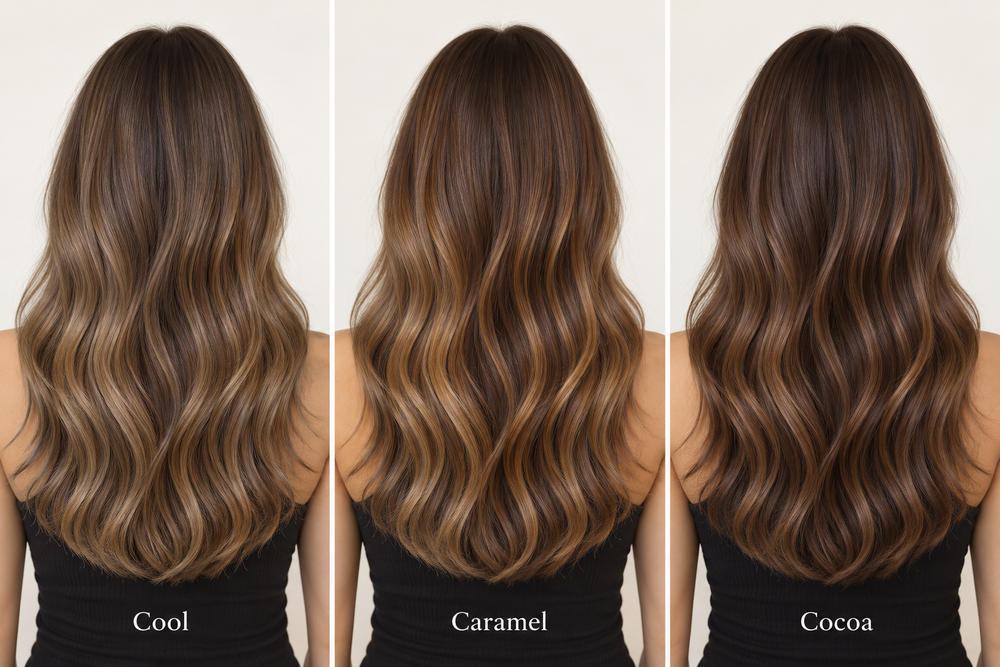
| Medium to dark brown with highlights or balayage | Caramel Lights or Cocoa Lights | Enhances warm caramel or deeper chocolate-looking highlights |
| Strawberry blonde, light brown, or red | Copper Crush | Adds brighter copper tones |
| Light to dark brown or red | Auburn Spice or Glacé Cherry | Adds mahogany or cherry-red tones |
| Dark brown to black | Luminous Liquorice or Raven Black | Enriches the appearance of very dark hair |
Glaze’s range includes special editions and packaging changes, so check the current product description before buying. For example, the newer Cocoa Lights listing may show as unavailable while an original-packaging Cocoa Lights listing is available. Availability can change without changing which hair color the shade is intended for.

Start With Your Hair, Not the Shade Name
First, look at your hair in natural daylight. Decide whether its lightest visible pieces are blonde, bronde, light brown, medium brown, dark brown, or black. Then ask whether those pieces are natural or lightened. This matters because a highlighted brunette has two starting colors to consider, and the lighter pieces may take up a tint more noticeably.
Glaze specifically advises matching a colored shade to the lightest tones in your hair. It also cautions against putting shades intended for brunette, red, or black hair onto blonde hair or highlights simply to achieve a darker transformation. If previously lightened hair has since been dyed darker, the brand recommends extra care when choosing a shade. Its Best Glaze Shades for Blonde Hair
For light blonde hair that looks yellow, Pearl Blonde is the shade Glaze describes as suitable for light blonde natural or bleached hair. For medium to dark natural blonde, Honey Blonde is positioned as a way to refine warm, brassy tones. Brilliant Bronde is aimed at the space between dark blonde and light brown, where the goal is more depth rather than a pale blonde finish. Highlights need a separate decision. Vanilla Lights is intended for blonde to medium brown hair with highlights or balayage when those lighter sections look brassy. That distinction matters if you are comparing an all-over blonde shade with a gloss for highlighted hair. StoryPrior’s guide to all-over blonde color versus highlights explains why those starting looks require different upkeep. A blonde gloss will not lift your natural color. If your roots are dark and your goal is a much lighter blonde, you are looking for a lightening service, not a glaze. For natural light to medium brown hair, Teddy Brown is a straightforward choice when you want a deeper brunette appearance. On medium to dark brown hair, Chocolate Gleam takes a warmer direction, while Blazing Brown and Sleek Espresso are described as cooler options. Shade names alone can be misleading, so compare each product’s recommended starting hair color before choosing between two browns. If your brunette hair has balayage, focus on the lighter sections. Caramel Lights is intended to enhance warm caramel-looking highlights. Cocoa Lights is intended for medium to dark brown hair with highlights or balayage when you want richer, deeper brown tones through those pieces. Vanilla Lights serves a different purpose: cooling brassiness in lighter highlights. Example: If your natural base is dark brown but your balayage is light blonde, do not select solely by the dark roots. Look at the lightened lengths and the tone you want there. When the contrast is large, or the hair has several layers of old color, ask a colorist before applying a tinted gloss across everything. Copper Crush is aimed at strawberry blonde, light brown, or red hair when you want a brighter copper look. Auburn Spice leans toward mahogany, while Glacé Cherry is for a cherry-red direction on a suitable brown or red base. These are color-enhancing choices, so expect your existing depth to influence how visible the result is. For very dark hair, Luminous Liquorice and Raven Black are intended to enrich dark brown to black tones. The change may be most obvious in reflected light rather than as a new all-over color. If you are unsure whether any pigment is welcome, clear Sheer Glow avoids the shade-matching problem entirely. A fair before-and-after comparison uses the same lighting, angle, styling, and hair condition. A freshly styled “after” photo can look smoother even when part of the difference comes from blow-drying or lighting. Look for changes in shine and tone on the same strands, especially in daylight, rather than expecting an entirely new hair color. Glaze states that Supergloss is meant to enhance existing color and does not cover gray hair. Its “up to 10 washes” description is an upper limit, not a guarantee for every head of hair. If gray coverage or a major color shift is your goal, ask about an appropriate salon color service instead. The brand’s application directions call for shampooing first, applying Supergloss to damp hair in place of your usual conditioner, waiting 10 minutes, and rinsing until the water runs clear. Check the instructions on the exact product you buy in case its directions differ. Do not leave a tinted product on longer in the hope of turning it into permanent dye. If you develop irritation, stop using it and seek professional advice. This is general product-use information, not a diagnosis of a scalp or skin condition. Supergloss is a semi-permanent, color-depositing gloss. Some shades are intended to refine unwanted warmth, so they can serve a toning purpose, but Glaze does not position the range as a way to make a major color change. It depends on what you want the highlights to do. Vanilla Lights is aimed at cooling brassiness in suitable highlighted hair, while Caramel Lights and Cocoa Lights enhance warmer caramel or deeper chocolate tones on brunette balayage. No. Supergloss does not lighten hair, so a blonde shade cannot lift dark pigment. Choose a gloss for your existing color, or speak with a colorist if you want a lighter base. Sheer Glow is Glaze’s clear option for shine without color pigment. It is the most direct choice when you like your current tone or cannot confidently match a tinted shade. Glaze says the effect gradually washes out over up to 10 washes. Your result may fade sooner depending on the starting hair, the shade used, and how often you shampoo. Use this glaze hair color chart as a starting point, then check the product description against your lightest strands and your color history. Pick clear gloss for shine alone, a closely matched shade for natural hair, or a shade specifically made for highlights when those lighter pieces need a tone refresh. Before buying, view your hair in daylight and decide whether you want to cool brassiness, add warmth, deepen your existing color, or simply add shine. That one decision will narrow the chart far more effectively than choosing a bottle by its name.Best Glaze Shades for Brunettes and Highlights
Copper, Red, Black, and Clear Options
What a Glaze Before and After Can Actually Show
How to Apply Supergloss Carefully
FAQs
Is Glaze Supergloss a toner or a hair dye?
Which Glaze color is best for brown hair with blonde highlights?
Can Glaze Supergloss make dark hair blonde?
Does a clear hair glaze change hair color?
How long does Glaze Supergloss last?
Conclusion