

Difference Between Long and Short Layers: Which Suits You?
The difference between long and short layers is where the shorter pieces sit within your haircut. Long layers keep those pieces relatively close to your overall length, creating a soft, blended shape. Short layers place shorter pieces higher up, making the movement and shape more noticeable.
Neither term tells your stylist how long your hair should be overall. You can have waist-length hair with short layers or a shoulder-length cut with longer, subtle layers. The choice comes down to where you want movement, how full you want your ends to look, and how much styling you are willing to do.
Key Takeaways
- Long layers create gentle movement while usually preserving more weight at the ends.
- Short layers can create more visible texture and lift, especially when placed near the crown.
- Hair that is fine or low in density may look wispy at the bottom if too much weight is removed.
- A photo helps, but telling your stylist where the shortest piece should fall when dry is more precise.
- Face-framing pieces and layers throughout the back are separate choices. You can have one without much of the other.
What are long layers and short layers?
A layered haircut contains sections cut to different lengths. The shorter sections sit over or beside longer ones, changing how the hair falls and moves. The words long and short describe the layers within the cut, not necessarily the length of the finished hairstyle.
With long layers, the shortest sections remain fairly long and transition gradually into the bottom edge. With short layers, the shortest sections begin higher or create a more visible difference between the top and bottom of the cut. A stylist can also adjust how blended or defined either version looks.
There is no universal measurement that makes a layer “long” or “short.” A cheek-length piece would be short in one haircut, while a piece near the shoulders could be the shortest layer in much longer hair. This is why a comparison of layered and non-layered hair can help you decide whether you want layers at all before choosing their placement.
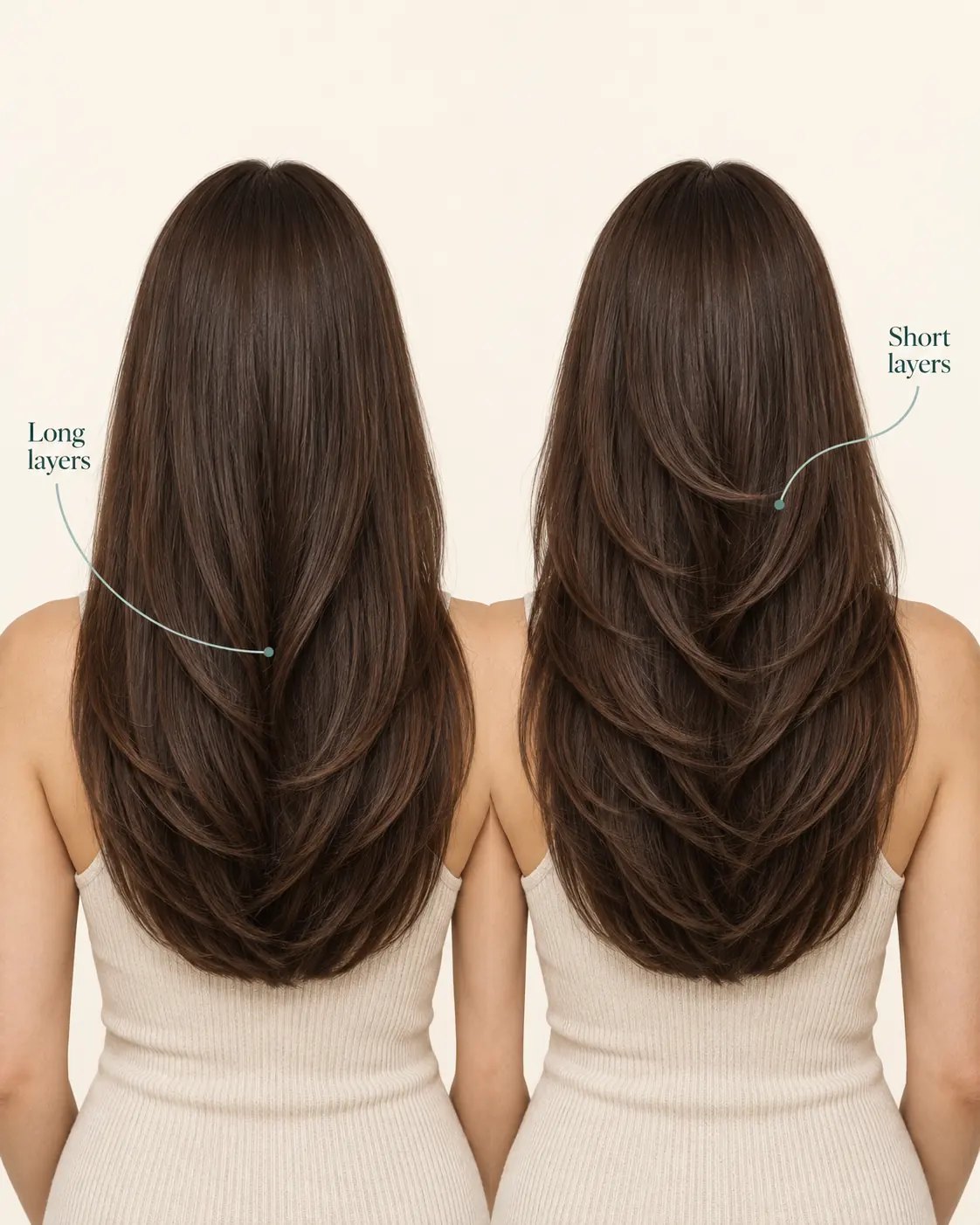
Long layers vs short layers at a glance
| Consideration | Long layers | Short layers |
|---|---|---|
| Shortest pieces | Stay closer to the overall length | Begin higher or create a more noticeable length difference |
| Overall appearance | Soft and blended | More defined, textured, or bouncy |
| Crown lift | Usually limited if layers begin low | Possible when shorter layers are placed near the crown |
| Bottom edge | Easier to keep looking full | Can look lighter if too much hair is removed |
| Hair worn up | Longer pieces may be easier to secure | Shorter pieces may escape a ponytail or bun |
| Growing out | Usually blends gradually | A stronger shape may become more noticeable as it grows |
These are tendencies, not guarantees. Density, curl pattern, styling, and the amount of hair removed can change the result. Professional haircut education emphasizes choosing both the shortest face-framing point and the desired bottom length before connecting the layers between them.

Which is better for your hair type?
Fine or low density hair
First, distinguish fine hair from low-density hair. Fine describes the thickness of individual strands; density describes how much hair grows on the scalp. Someone can have many fine strands or fewer thick strands, and those two heads of hair may need different cuts.
If your ends already look see-through, I would start with a strong bottom edge and a small number of long or carefully placed layers. Short layers can give selected areas some lift, but removing too much hair may leave the bottom looking thinner. Sam Villa’s stylist education specifically highlights protecting the perimeter when layering fine hair.
Ask your stylist to show you how much hair would remain at the ends. If you mainly want movement around your face, you may need only a few face-framing pieces rather than layers throughout the back.
Thick or dense hair
Dense hair offers more room to remove weight, but short layers are not automatically the best choice. Long layers can ease a heavy, solid-looking shape while keeping a smooth outline. Shorter layers can create a more pronounced shape when you want the upper sections to move independently.
The placement matters as much as the amount removed. If your hair already expands around the crown, ask how higher layers will behave when you let it dry naturally.
Straight hair
Straight hair tends to show the cut’s lines clearly. Long layers can add a little movement without making each section obvious, while short layers may produce a more textured shape. Poorly blended layers may also stand out more when the hair is worn sleek.
Bring a reference photo showing hair in a finish you would actually wear. If you regularly heat-style naturally wavy or curly hair, tell your stylist about both looks; your layers will sit differently in each. You can also read StoryPrior’s guide to how long straightened hair lasts when deciding how much of your haircut should depend on a straight finish.
Wavy, curly, or coily hair
Layers can change the outline of wavy or curly hair by reducing weight in chosen areas. Longer layers may keep a softer, more weighted shape; shorter layers may allow more visible movement around the sides or top. The result depends on where each section lands after it dries.
Show your stylist your hair in its usual state and explain whether you want more width, less width, or a rounder shape. Curly and coily hair can also be more prone to dryness and breakage, so the American Academy of Dermatology’s curly-hair care guidance is useful when planning how you will care for the finished cut.

Can you have short layers on long hair?
Yes. The bottom of your hair can remain long while shorter sections begin around the face, through the upper lengths, or near the crown. Think of overall length and layer placement as two separate instructions.
Be specific about which short layers you mean. A chin-length face frame changes the front of the haircut; short crown layers change its shape from above and behind. If you want both, say so. If you want your long hair to fit into a ponytail, tell your stylist before any short pieces are cut.
The same distinction applies to bangs and fringe. A fringe can frame your face without requiring short layers through the rest of your hair; StoryPrior’s guide to choosing fringe for your face shape shows why the front pieces deserve their own discussion.
How to choose the right layers before your appointment
Start with the result you want to see in your everyday hair, not the name of a trending cut. A salon photo may have been curled, blown out, or styled with products that make its layers more visible than they will be at home.
Use this short checklist:
- Choose your bottom length. Point to where you want the longest hair to end.
- Choose the shortest acceptable piece. Point to where it should fall when your hair is dry.
- Describe the shape. Say whether you want a full bottom edge, crown lift, less bulk, or more face framing.
- Explain your routine. Mention whether you air-dry, straighten, diffuse, or usually wear your hair up.
- Show two photos if possible. Bring one example you like and one showing a result you want to avoid.
For example, “Keep the bottom at my mid-back and make the shortest layer no higher than my collarbone” gives a stylist a clearer starting point than “just give me long layers.” Professional stylist guidance likewise starts the consultation by asking where the shortest pieces should fall.

Common mistakes when asking for layers
Using “long layers” without showing where they should start. People can use the same phrase for different results. Point to the shortest acceptable section and check how it will sit when dry.
Assuming more layers always mean more volume. Removing weight may help hair lift in one area while making another area look less full. If your main concern is thin-looking ends, ask your stylist to protect the bottom edge.
Choosing only from a heavily styled photo. Soft curls and a blowout can make layers look more dramatic or polished. Ask how the shape will appear with your usual styling method.
Ignoring how you wear your hair up. Very short face-framing or crown pieces may slip out of a ponytail. Explain which hairstyles you need the cut to accommodate.
Trying to fix an unwanted cut with daily heat styling. A different finish can disguise a shape temporarily, but frequent hot-tool use can damage hair. The AAD’s advice on styling hair without damage recommends limiting heat and using lower settings when you do style.

FAQs
Which is better, long or short layers?
Long layers are a good starting point if you want subtle movement and a fuller-looking bottom edge. Short layers may suit you if you want a more defined shape or movement higher up. Your hair density, texture, and styling routine should guide the final choice.
Is it better to have long or short layers in thin hair?
If by “thin” you mean fewer strands and sparse-looking ends, a strong bottom edge with minimal, longer layers is often the safer starting point. Carefully placed shorter pieces can still work, but ask your stylist how much hair will remain around the sides and ends.
Does long hair look better with or without layers?
Either can look good. A one-length cut creates a solid outline, while layers can add movement or change how weight is distributed. Choose based on the shape you want rather than assuming long hair always needs layers.
What is the difference between long and short layers on straight hair?
Long layers usually look more subtle and blended on straight hair. Short layers make the changes in length easier to see and may add a more textured outline. The blending of the cut becomes especially noticeable when hair is worn sleek.
What is the difference between long and short layers in a curly haircut?
Longer layers generally leave more weight in the shape, while shorter layers can change where curls spring outward and create visible movement higher up. Curl pattern and density affect the result, so ask your stylist to judge the shortest pieces in your hair’s natural, dry state.
Are short layers on long hair the same as face-framing layers?
No. Face-framing layers describe where hair is cut: around the front. Short layers describe the relative length of pieces and may be cut around the face, through the sides, or near the crown. Tell your stylist which areas you want layered.
Conclusion
The difference between long and short layers is the position and effect of the shorter pieces within your haircut. Long layers offer a softer change and can help retain a fuller outline; short layers create a more visible shape but need careful placement if you want to protect fullness at the ends.
Before your appointment, save a photo of your preferred result and decide where both the longest hair and shortest layer should fall. Show your stylist how you normally wear your hair, then agree on those two lengths before the cut begins.