


How to Get Stain Off Skin Without Irritating It
If you are wondering how to get stain off skin, start with water that is lukewarm and a mild soap. When the color is still there and the skin is not burning, blistered, cut, or irritated, gently rub in a small amount of cleansing oil, mineral oil, baby oil, or plain cooking oil and then wash again. Since most cosmetic and food stains are only temporary, it is more important to protect your skin than to remove every trace at once.
The following step will vary according to the cause of the stain since hair dye, henna, food coloring, ink, and oil-based wood stain all act differently. This guide will assist you in selecting a safer method, in identifying the cases where a stain is really a chemical exposure, and in avoiding those common remedies which can cause more harm than the discoloration.
Safety note: The article provides general information on skin care and first aid and should not be regarded as personal medical advice. In the case of a chemical exposure, you should refer to the product label and the Safety Data Sheet. If you are experiencing ongoing pain, redness, swelling, blistering, difficulty in breathing, have had eye exposure, or are uncertain about the product, then you should get in touch with Poison Control or a healthcare professional.
First, Identify the Type of Stain
Do not reach for the strongest cleaner in the house. Start by identifying the substance and checking whether the skin merely looks discolored or is reacting to it.
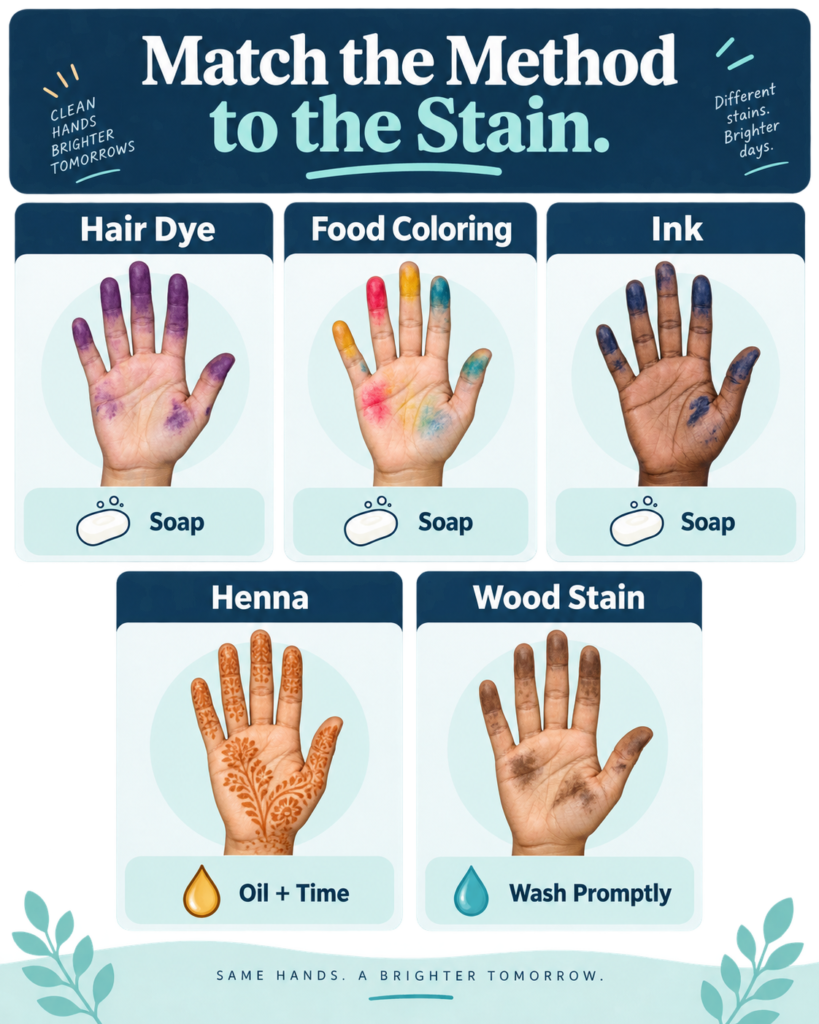
| Type of stain | Best first step | Gentle follow-up | Avoid |
|---|---|---|---|
| Hair dye | Mild soap and lukewarm water | Micellar water or a small amount of oil | Bleach, aggressive scrubs, acetone on the face |
| Food coloring | Soap and water | Oil cleanser, then wash again | Repeated rubbing or acidic DIY mixtures |
| Pen or washable marker | Soap and water | A little rubbing alcohol on intact hand skin only | Alcohol near eyes, mouth, cuts, or irritated skin |
| Natural henna | Gentle washing | Oil and time; light exfoliation if skin tolerates it | Harsh peeling, bleaching, or repeated scrubbing |
| Oil-based wood stain | Remove contaminated items; wash promptly | Follow the label and seek exposure advice if needed | Paint thinner, mineral spirits, gasoline, or turpentine on skin |
| Water-based paint or craft color | Soap and water before it dries | Oil cleanser for residue, if appropriate | Paint remover on skin |
If you don’t know what the product is, consider it a possible exposure not just a minor inconvenience. Take off any contaminated jewellery or clothing, wash the area, and look in the container for first-aid instructions.
How to Get Stain Off Skin Step by Step
When dealing with a normal cosmetic, food, or craft stain on sound skin, use the method that is the least likely to cause irritation. Halt the procedure if the area starts to tingle, burn, swell or become red.
1. Remove excess product
To blot up wet dye or color, use a damp, disposable cloth rather than spreading it over a larger area. Remove any rings, watches, or clothing which may keep the product in contact with your skin.
2. Wash with mild soap and lukewarm water
Gently lather the area for about 20 seconds, rinse well, and pat it dry. Poison Control similarly recommends thorough washing with soap and water when paint, varnish, or lacquer gets on the skin.
3. Try an oil-based remover for leftover color
If the substance in question is a cosmetic or food dye and the skin appears normal, then apply a small quantity of mineral oil, baby oil, cleansing oil, olive oil, or another simple cooking oil and leave it on for a few minutes before gently wiping it off and washing it away with mild soap so that oily residue is not left behind.
Oil can be used to loosen oily pigments and residue without having the same drying effect as strong solvents, although it may not immediately remove a dye which has been deeply absorbed, and that is acceptable.
4. Use micellar water on delicate areas
Micellar water or a mild facial cleansing balm is usually a sensible choice when looking after the area around the hairline. You should make sure that none of the cleansers get into the eyes and never apply them to damaged or inflamed skin.
5. Rinse, moisturize, and wait
Apply a fragrance-free moisturizer after cleaning, especially if you washed the area more than once. The American Academy of Dermatology recommends moisturizing after handwashing to help reduce raw, irritated skin associated with frequent washing and contact dermatitis.

How to Remove Different Stains From Skin
The procedure works for a great many types of marks, but in some cases the stain has to be treated in a special way. Choose the section which corresponds to the substance on your skin.
Hair dye around the hairline, ears, or hands
Since fresh hair dye is easier to remove than dried dye, get rid of it as soon as possible and clean it off with a gentle cleanser. If there is still some colour left, try using micellar water or a little plain oil before rinsing and then moisturizing. Do not scrub the facial skin or put nail-polish remover near the eyes.
Hair dye can cause more than a temporary mark. Follow the package directions and perform any manufacturer-required allergy test before use; the FDA’s hair dye guidance also advises users not to dye eyebrows or eyelashes and to stop if a reaction occurs. If you develop itching, swelling, blisters, raw skin, or trouble breathing, stop trying stain-removal remedies and seek medical help.
Food coloring, drink mix, and cake dye
Remove the food coloring before it has dried; if the soap leaves a shadow, then rub a small amount of oil or an oil-based cleanser on the area, wash again, and then proceed with normal handwashing.
Bright colors can stay in the outermost layer of the skin for a short period. However, scrubbing repeatedly with salt, sugar, or a rough brush will only cause soreness and not speed up the disappearance of the stain much.
Pen ink and marker
Start with soap and water. For stubborn pen ink on intact hand skin, Poison Control says you can try gently cleaning with isopropyl alcohol if washing is ineffective. Use a small amount, keep it away from the eyes and mouth, rinse afterward, and moisturize because alcohol can be drying.
A permanent marker is not always permanent on the skin since it tends to fade as a result of the skin’s natural oils, washing, and the usual process of skin shedding, and therefore there is no need to rub it until the skin becomes raw.
Turmeric, beet juice, and plant pigments
Mild soap followed by a little oil is a sensible first approach for kitchen pigments. A faint yellow, red, or purple tint may last through several washes, but it usually fades without aggressive treatment.
Plant-based does not automatically mean irritation-free. Skip lemon juice on sensitive, freshly shaved, cracked, or inflamed skin because acidic mixtures can sting and irritate.

How to Get Oil-Based Wood Stain Off Skin Safely
Oil-based wood stain is a chemical product, not just a color located on the surface; you should read the label and the Safety Data Sheet since the compositions vary, and you should regard any symptoms as being due to exposure rather than attempting to get your hands looking clean as quickly as possible.
- Get away from the fumes and take off any gloves, jewelry, or clothing that have been contaminated.
- Clean the exposed skin with water and then wash it well using mild soap and water.
- You should not use paint thinner, mineral spirits, gasoline, kerosene, or turpentine to clean your skin since these solvents may irritate it and remove the oils from it.
- If the skin still looks discolored but feels normal, there is no need to keep scrubbing. A little ordinary cooking oil might help to loosen the oily build-up, but you should then wash it off with soap.
- If the product causes burning, numbness, an increase in redness, swelling, blistering, dizziness, nausea, or symptoms relating to breathing, then you should follow the first-aid instructions on the label and get in touch with Poison Control or go to a clinic that provides urgent care.
For some solvent exposures, official CDC decontamination guidance begins with a water rinse followed by mild soap and thorough rinsing. The exact response can vary by chemical, which is why the product label or Safety Data Sheet should guide you.
As soon as wood stain gets into the eye you should immediately begin rinsing it with clean, running water and get specific advice regarding the product. Do not place oil, alcohol, or another remover into the eye.

How to Remove Henna Stain From Skin Quickly
Henna naturally attaches itself to the keratin in the outer layer of the skin, which means that there is no safe way to ensure that the color is removed immediately. You should wash it gently, apply a simple oil, and then let the color fade through regular bathing and the natural turnover of the skin. If your skin can withstand exfoliation, a soft washcloth may be of some help, but you must stop the process before the skin becomes tender or red.
Be particularly careful with products sold as “black henna.” The FDA warns about reported skin injuries from henna and black-henna products. Pain, intense itching, raised redness, blisters, or swelling after a temporary tattoo is not an ordinary stain-removal problem and deserves medical attention.

Natural Methods: What Helps and What Can Irritate
If you want to find out how to remove a stain from the skin using natural methods, the best thing to do at the beginning with ordinary dyes is to use plain oil and wash gently. However, just because something is ‘natural’ does not mean it is safe, and kitchen-based ingredients can still harm an already strained skin barrier.
Generally gentle options
- Mild, fragrance-free soap and lukewarm water
- Plain mineral oil, baby oil, cleansing oil, or cooking oil for oily cosmetic residue
- Micellar water or a gentle cleansing balm around the hairline
- A soft washcloth used with light pressure
- Fragrance-free moisturizer after washing
Methods I would skip
- Household bleach or bleaching cleaners
- Paint thinner, mineral spirits, gasoline, kerosene, or turpentine
- Undiluted essential oils
- Repeated lemon-juice, vinegar, or baking-soda treatments
- Rough brushes, pumice stones, or prolonged scrubbing
- Mixing household chemicals or cleaners
One detail I would not overlook is skin condition. A product that merely dries healthy hand skin may severely sting eczema, a cut, a hangnail, freshly shaved skin, or the delicate area around the eyes.
When to Stop Cleaning and Get Help
A stain that is harmless changes color, but it shouldn’t continue to cause pain or lead to changes in the tissue. If you notice any of the following, stop cleaning and get professional advice.
- Burning that continues after rinsing
- Increasing redness, warmth, swelling, pain, or blistering
- Hives, facial or lip swelling, wheezing, or trouble breathing
- Dizziness, vomiting, confusion, or unusual sleepiness after chemical exposure
- Product in the eye, mouth, a large skin area, or an open wound
- Exposure involving a child or an unidentified industrial product
If you are experiencing severe breathing difficulty, collapse, a seizure, or significant swelling, you should call emergency services. In the case of a less obvious exposure, you can use the online Poison Control tool or call the number found on the official page for advice specific to the product.

How to Prevent Skin Stains Next Time
It is easier to carry out preventive measures when looking after your skin than to clean repeatedly. Use gloves that are appropriate for the product, cover your work surface, have a damp cloth close at hand, and clean up small spills before they dry.
When coloring your hair, it is necessary to apply a thin layer of petroleum jelly or a rich moisturizer around the hairline without covering the hair. In the case of painting or when carrying out work involving wood finishes, you should use the protective equipment listed on the label or the Safety Data Sheet, work in a well-ventilated area, and replace any damaged gloves rather than continuing to use them.
FAQs
How do you get stain off your skin naturally?
For food color, cosmetic dye, or a similar harmless mark, start with mild soap and lukewarm water. Massage in a small amount of plain oil if color remains, wash once more, moisturize, and allow any faint tint to fade naturally.
How do you get stain off of your hands?
Take off the rings, wash your hands using mild soap, and use a soft nail brush to clean under the nails only if the skin is not irritated; for ink a little rubbing alcohol might be of help on undamaged hand skin, while oily dyes may respond better to plain oil followed by soap.
How do you clean stain off hands without scrubbing?
Leave some cleansing oil or unadulterated cooking oil on an ordinary cosmetic or food stain for a few minutes, then gently wipe it off and clean it with soap. With regard to chemical products like wood stain, it is better to follow the first-aid instructions given on the product rather than soaking your hands in a home remedy.
Can rubbing alcohol remove stains from skin?
Rubbing alcohol might remove pen ink or certain dyes, but it can cause the skin to dry out and become irritated. Use only a small quantity on undamaged skin, keep it away from the eyes and mouth, wash it off afterward, and do not use it in the case of a painful chemical exposure.
How do you remove henna stain from skin quickly?
You may use gentle washing, a simple oil, and light exfoliation to encourage the fading, provided that your skin is able to tolerate it; however, natural henna cannot always be removed immediately. In the event that a dark temporary tattoo causes itching, swelling, pain, or blisters, you should obtain medical advice since the problem might be a reaction and not just a normal stain.
What should you never use to remove wood stain from skin?
Don’t use paint thinner, mineral spirits, gasoline, kerosene, or turpentine as cleaners for your hands. Instead, wash them immediately with soap and water and follow the instructions on the label; if symptoms appear, get in touch with Poison Control or a healthcare professional.
Conclusion
The safest answer to how to get stain off skin is usually simple: identify the substance, wash gently, use oil or micellar water only when appropriate, and give harmless discoloration time to fade. Do not trade a temporary mark for an irritated or chemically injured skin barrier.
Save this guide for your next hair-color, cooking, craft, or refinishing project, and prepare gloves and gentle cleanser before you begin. If the exposure involves an unknown chemical or causes symptoms, stop experimenting and get product-specific professional advice.