


How to Get Spray Foam Off Skin Safely
If you need to know how to get spray foam off skin, act quickly but do not panic. If the foam is wet, wipe off excess foam and wash with soap and copious amounts of water as directed on the foam label. The foam will typically not be improved by the use of harsh solvents after it has cured. Rubbing and normal skin shedding will do the rest, and it’s safer to soften the residue with warm soapy water and oil.
The first thing to determine is if the foam is wet and sticky or dry and firm. This guide will help you understand what to do in both cases, what common remedies can do more harm than good, and when exposure requires medical attention.
Safety note: This article provides general first-aid information, not medical advice. Read the label and Safety Data Sheet for the exact product you used because formulations and instructions differ. If foam entered your eyes or mouth, covered a large area, caused a rash or burn, or was accompanied by coughing, wheezing, chest tightness, or breathing difficulty, contact Poison Control or seek urgent medical care.
First, Determine Whether the Spray Foam Is Wet or Cured
Spray polyurethane foam begins reacting as soon as it leaves the container. Wet foam looks glossy, feels tacky, and may transfer when you touch it. Cured foam is firm, dry, and plastic-like. DuPont’s consumer safety information notes that dispensed foam begins curing immediately and can stick permanently to many surfaces, including skin, so the window for easy cleanup is short.
The best way to clean up the foam depends on its condition. Solvents can have an impact on uncured material, but they will not undo the chemical reaction once the foam has cured.
| Foam condition | What it feels like | Best first response | What to avoid |
|---|---|---|---|
| Wet or uncured | Sticky, glossy, transferable | Remove excess without spreading it, then wash with soap and plenty of water | Rubbing it across more skin or waiting for it to harden |
| Partly cured | Rubbery or tacky in spots | Wash, apply oil if allowed by the product guidance, and use gentle friction | Pulling hard enough to remove skin or hair |
| Fully cured | Hard, dry, plastic-like | Soak, moisturize, loosen the edges gently, and allow time | Blades, gasoline, aggressive scraping, or repeated solvent use |
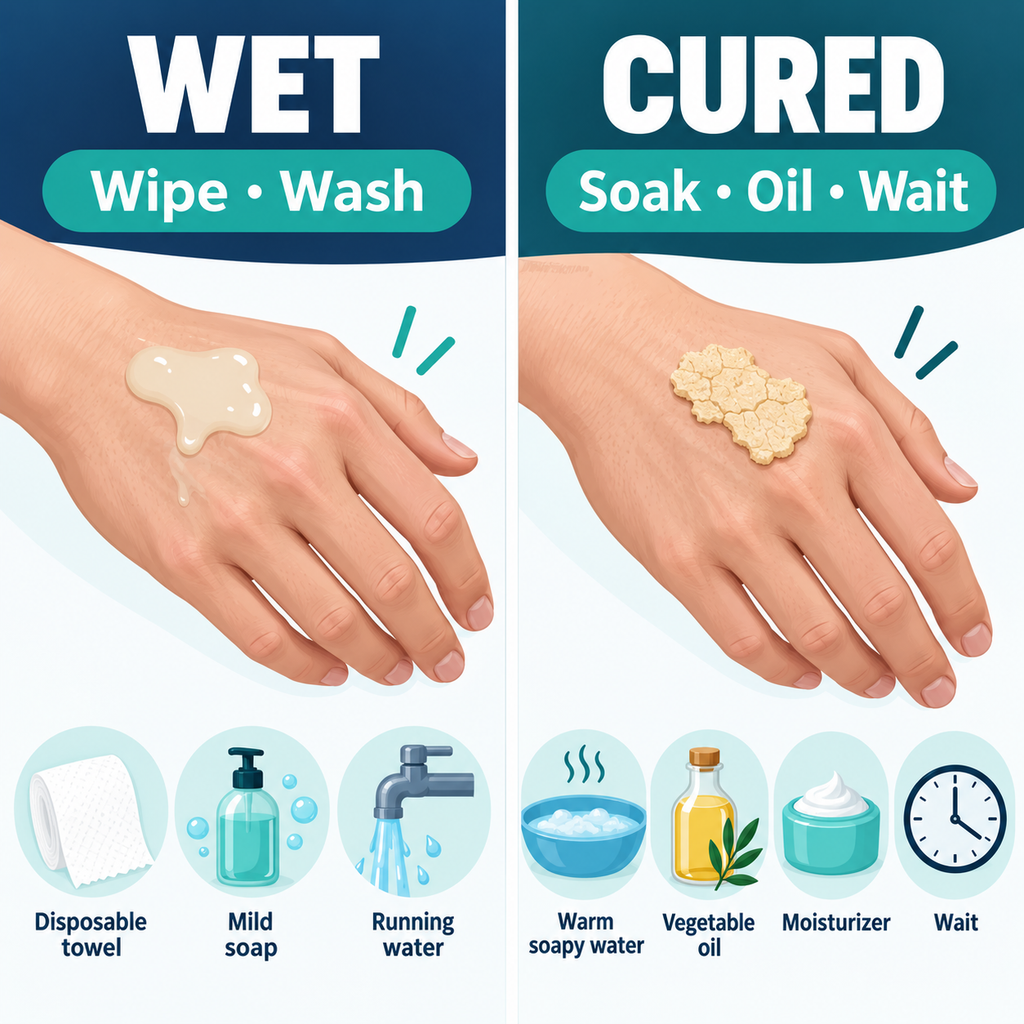
How to Get Spray Foam Off Skin While It Is Wet
The safest general response is prompt decontamination. A current DuPont spray-foam Safety Data Sheet advises removing material immediately with soap and plenty of water, removing contaminated clothing while washing, and seeking medical help if irritation persists. The same document reports that very early cleaning matters and that a polyglycol-based skin cleanser or corn oil may outperform soap and water for the product covered by that sheet.
Follow these instructions unless the label for your particular foam provides other instructions. If the directions contradict general information found online, follow the directions provided on the product.
- Cease spraying and go to fresh air. Place the container on a safe surface, away from heat or fire. If vapors are present, leave the application area before beginning a lengthy cleanup.
- Remove contaminated items. Take off rings, watches, gloves and clothing that can get wet foam stuck between the skin. Avoid reusing contaminated clothing until it has been cleaned following the instructions on the product.
- Remove excess foam. Lift the material with a disposable dry towel or clean cloth, don’t smear. Start outside the spot and move towards the center.
- Wash thoroughly. Use mild soap and lots of lukewarm water. Focus on fingernails, knuckles and creases, but avoid scrubbing until the skin is raw.
- If there is any residue, try oil. If product guidance permits, rub a little corn oil or regular vegetable oil on the residue, wipe it off and wash again with soap and water.
- Dry and moisturize. Dry the skin and use a fragrance-free moisturizer. Washing repeatedly can dry out the skin and make it more susceptible to irritation.
The CDC-supported construction safety guidance also recommends washing exposed skin immediately with soap and water. Fast cleanup matters for more than appearance because uncured spray foam can contain isocyanates that irritate or sensitize the skin.

Should You Use Acetone on Wet Spray Foam?
While certain manufacturers and do-it-yourself guides suggest using acetone to clean tools or surfaces that have uncured foam, this does not mean that it is the most suitable option for use on the skin. Acetone has the ability to remove the skin’s natural oils, cause a stinging sensation on dry or cracked skin, and make dryness worse. It is also very flammable and therefore should never be used near a pilot light, a cigarette, a spark, or the propellant in the foam can.
I suggest that you follow the first-aid instructions given on the can or its Safety Data Sheet. If those instructions expressly allow the use of acetone on the skin, then you should use only a small quantity on undamaged skin in a well-ventilated area, keep it away from the eyes and mouth, and rinse it off as soon as possible. Do not soak your hands in acetone, do not mix it with other cleaning products, and do not use it on skin that is irritated, broken or sensitive.
How to Remove Spray Foam From Skin Without Acetone
Wet residue can often be removed using soap, water and an oil-based method as specified in the product instructions, without the use of acetone. Acetone is even less effective for cured foam, as the foam is already hardened into a tough polymer.
Try this skin-friendly sequence and stop if the skin begins to hurt. It is better to repeat a gentle method later than to cause an abrasion now.
- Soak the affected area in comfortably warm, soapy water for 10 to 15 minutes.
- Massage vegetable oil, mineral oil, or petroleum jelly around the edges of the foam.
- Allow the oil to sit for a few minutes, then gently roll or rub away any loose residue with a soft washcloth.
- Rinse off with a gentle soap, pat dry and moisturize.
- If there is still a thin film, scrub later, not harder.
Oil will not completely dissolve fully cured polyurethane. It decreases friction, softens surrounding skin and operates under loose edges. A patient approach is safer than attempting to get rid of the residue in one session.

How to Get Cured Spray Foam Off Skin
Spray foam that has been cured is hard to safely dissolve. After it sets, concentrate on slow mechanical removal without damaging the living skin underneath. A small patch will usually come off over the next few days as the skin oils, washing, and normal shedding break the bond.
Begin with a warm soak in a warm soapy bath as described above. If the foam is on the body hair, apply oil to the area and massage gently from the ends of the hair towards the skin. Using blunt tipped scissors to cut affected hair may be safer than pulling, but avoid scissors touching skin and seek assistance if visibility is limited.
If there is a thin layer left, apply very light pressure with a soft washcloth or a fine pumice stone after soaking. If the skin becomes sore, red, cracked or raw, stop immediately. Do not use a utility knife, razor, metal scraper, sandpaper or power tool on your body.
Avoid removing foam that is firmly attached. The residue is not as serious as the abrasion that can be caused by peeling too hard, which can lift the top layer of skin. Moisturize, protect from rubbing, and let it heal.

What Not to Use on Your Skin
It is common for people taking part in online discussions to suggest the use of gasoline, diesel, kerosene, brake cleaner, lacquer thinner, paint thinner, or a commercial foam-gun cleaner. Such substances can cause you to be exposed to further hazardous chemicals and might defat the skin, irritate it, or even burn it. They should not be used as home remedies for your hands or body.
Do not make these common mistakes since they may turn a sticky situation into chemical exposure or skin damage. Yet none of them is needed when carrying out ordinary home cleaning.
- You should not wash using gasoline or other fuels.
- You should not mix solvents, cleaners, or acids.
- Unless the product manufacturer specifies it, do not use vinegar or baking soda as a chemical “neutralizer”.
- Avoid using a wire brush, coarse sandpaper, or an abrasive pad.
- Avoid using a blade to shave cured foam off the skin.
- You should stop using acetone once the foam has hardened.
- You should not continue working while wearing contaminated clothing or in a poorly ventilated area.
The one point that I should not fail to notice is the contaminated material near the spill. Since leather watchbands, gloves, shoes, and belts are hard to decontaminate, the appropriate Safety Data Sheet might advise you to get rid of them. Put the soiled disposable towels in a safe place, away from any sources of ignition, and adhere to the instructions on the product label for disposal.
Is Spray Foam Dangerous on Skin?
Spray foam is not merely a sticky inconvenience before it cures. Many polyurethane foam systems contain isocyanates. The Occupational Safety and Health Administration explains that isocyanate exposure can irritate the skin and mucous membranes and may cause chest tightness or difficult breathing.
The Environmental Protection Agency’s spray-foam health guidance says skin, eye, and respiratory exposure can cause adverse reactions, including sensitization. Sensitization means a person can develop an allergy and later react to a much smaller exposure. Symptoms may appear immediately or be delayed for several hours.
Get medical advice if you develop persistent redness, swelling, itching, blistering, a spreading rash, or increasing pain. Call emergency services for severe breathing difficulty, collapse, or swelling involving the face or throat. For product-specific exposure advice, contact Poison Control and keep the container or Safety Data Sheet nearby so you can identify the exact foam.
What If Spray Foam Gets in Your Eyes?
When the eyes are exposed to the substance, they must be flushed immediately rather than using the skin removal techniques mentioned above. According to the DuPont Safety Data Sheet, users should rinse their eyes with water, take out their contact lenses if they are present after the first five minutes, keep flushing for at least 15 minutes and get medical help as soon as possible. It is not necessary to put oil, acetone or another solvent into the eye.
What If You Inhaled the Vapors?
Move to fresh air immediately and stop the project. Seek urgent help if you cough, wheeze, have chest tightness, feel dizzy, or have trouble breathing. The EPA notes that respiratory symptoms can be delayed, so do not dismiss symptoms simply because they did not start at once.

How to Get Spray Foam Off Clothes
When the foam is still wet, take the garment off without dragging the soiled area across your face or any other part of your skin. Instead of rubbing the excess foam into the fabric, wipe it off using a disposable cloth. Before attempting to use any solvent, refer to both the foam label and the garment care label since acetone may cause dyes to fade, dissolve synthetic fibres, and cause the stain to spread.
If the spray foam has already set inside the fabric, it may be impossible to remove it completely. Allow it to harden, then carefully break off only the raised portion without cutting the cloth, and try any cleaning method on a concealed area. Do not put a garment that has been wet with a solvent into a washing machine or dryer; instead, let it air dry in accordance with the solvent’s instructions and keep it away from heat or flame.
Preventing Spray Foam From Getting on You Again
It is safer and easier to carry out prevention than cleanup. According to guidance supported by the CDC, when carrying out spray-foam work people should use ventilation, chemical-resistant gloves, protective clothing, eye protection and appropriate respiratory protection. The right equipment will depend on the product and the application in question and so your setup should be based on the label of the can and the Safety Data Sheet.
Before starting a new project, carry out a rapid safety check; although having cleanup supplies on hand is helpful it does not take the place of appropriate personal protective equipment.
- Use the chemical-resistant gloves that are recommended for the product, not thin gloves that have been chosen arbitrarily.
- Wear long-sleeved clothes, full-length pants, closed shoes, and eye protection.
- Before you open the can, cover the nearby surfaces and have the disposable towels ready.
- Make sure that the work area is ventilated exactly according to the instructions.
- Keep both children, pets, and people who are not protected from the area where the application is being made.
- Make sure that you know the location of the product’s Safety Data Sheet and the details for emergency contact.
- If the nozzle, hose, or applicator is leaking, stop rather than attempting to repair it while it is under pressure.

Frequently Asked Questions
What is the fastest way to get spray foam off your hands?
When the foam is wet, take out the extra amount without spreading it and wash it right away with mild soap and a lot of water. The Safety Data Sheet for the product might also suggest a particular skin cleanser or an oil. But if it has already set then, it is safer to carry out multiple warm soaks, apply oil, gently rub it and be patient rather than to scrape aggressively.
How do you remove spray foam from skin without acetone?
Clean the wet foam as soon as possible using soap and a large amount of water, and if the instructions allow, try corn oil or vegetable oil. In the case of cured foam, soak the skin in warm, soapy water, massage some oil or petroleum jelly around the edges, and gently rub away only that portion which comes off easily.
Will vinegar remove spray foam from skin?
Vinegar is not a reliable remover for cured polyurethane foam, and its acidity can irritate skin that has already been scrubbed or exposed to chemicals. Use the manufacturer’s first-aid directions, soap and water, and a gentle oil-based approach instead.
How long does cured spray foam stay on skin?
A small residue may remain for several days and then loosen as the outer skin layer naturally sheds. The timing depends on the amount, location, and how strongly it bonded. Do not injure your skin trying to meet a specific deadline.
Does rubbing alcohol remove spray foam from skin?
Rubbing alcohol is unlikely to remove fully cured foam and can dry or irritate the skin with prolonged use. For wet foam, follow the label or Safety Data Sheet rather than substituting a solvent that the manufacturer does not recommend.
Is spray foam toxic after it dries on your hands?
The main exposure concern is the uncured product and its ingredients, but a cured patch can still cause trouble if you damage your skin while removing it. Wash the area, avoid further chemical exposure, and seek advice if irritation, rash, or breathing symptoms develop.
Can you remove dried spray foam from clothing?
You may be able to break or scrape raised cured foam from durable fabric, but residue embedded in the fibers can be permanent. Test any cleaner in a hidden spot, follow both labels, and never put solvent-wet clothing near heat or in a dryer.
Conclusion
The way to get spray foam off the skin is all about timing and self-control. You should quickly remove wet foam as the label says, wash it off with soap and a lot of water, and use a cleanser or oil that has been approved by the manufacturer when needed. In the case of hardened foam, it is better to use warm soaks, oil, light rubbing, a moisturizer, and time rather than resort to hazardous solvents or sharp tools.
Before you start on your next do-it-yourself project, download the Safety Data Sheet for the product and beforehand lay out the right gloves, eye protection, disposable towels, and ventilation equipment. If you are experiencing persistent skin irritation or have any respiratory symptoms, then you should stop the cleaning process and get in touch with a medical professional or Poison Control while having the product container with you.