


How to Get Rid of Shiny Skin on Legs Safely
If you are wondering how to get rid of shiny skin on legs, first, determine why your skin is reflecting light. A temporary sheen after using lotion, sunscreen, shaving oil, or body makeup is usually cosmetic. You can often reduce it by changing the amount or finish of the product you use.
But persistent shiny skin is different, especially if the leg also feels tight, swollen, cold, painful, numb, or very smooth. In that case, the goal isn’t just to make skin look matte. You’ll need to find and treat the underlying cause, which can be anything from dry or irritated skin to fluid buildup, vein problems, or decreased blood flow in the arteries.
This guide can help you sort out those possibilities, when home care makes sense, and when to seek medical attention. This information is solely for educational purposes and is not a substitute for professional medical advice, diagnosis, or treatment.
Discover what is making your legs shiny
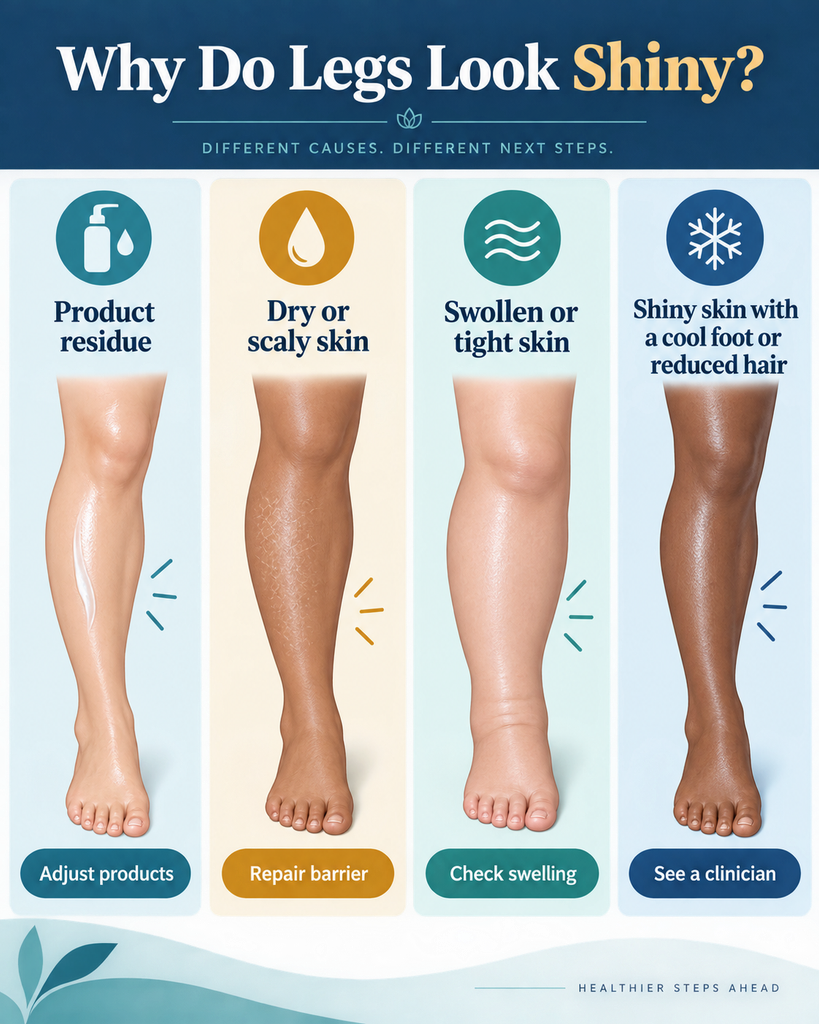
Shine is a visual clue, not a condition in itself. Light can reflect off a product on the surface, skin stretched by swelling, or skin that has changed texture due to dryness or poor circulation.
Use the pattern and related symptoms to determine the next steps.
| What you notice | Possible explanation | Sensible next step |
|---|---|---|
| Shine appears after lotion, oil, sunscreen, or body makeup | Product residue or a dewy product finish | Use less product or switch to a lighter, fast-absorbing formula |
| Skin is shiny but otherwise comfortable, even in color, and not swollen | Naturally smooth skin or harmless surface reflection | No treatment is medically necessary; change products only if the appearance bothers you |
| Skin is dry, itchy, rough, flaky, or scaly | Dry skin, irritation, over-washing, friction, or a skin condition | Begin gentle barrier care and seek help if it persists or worsens |
| Skin becomes shiny after swimming | Water plus product residue, or dryness and irritation after pool exposure | Rinse promptly, wash gently, and moisturize while the skin is damp |
| Ankles or lower legs look tight and shiny and leave sock marks | Swelling, also called edema, or a possible vein-related issue | Arrange a medical assessment if it is new, persistent, or worsening |
| Skin is smooth and shiny with reduced leg hair, a cool foot, walking pain, or a slow-healing sore | Possible peripheral artery disease (PAD) | Contact a healthcare professional promptly for a circulation evaluation |
| One leg suddenly becomes swollen, warm, red, tender, or painful | Possible deep vein thrombosis (DVT) or another urgent problem | Seek urgent medical care; call emergency services for chest pain or shortness of breath |
How to Get Rid of Shiny Skin on Legs When the Cause Is Cosmetic
If the shine develops after you use a product and disappears after you cleanse, the formula or amount is probably to blame. But it doesn’t mean it’s an unhealthy product. Oils, ointments, water-resistant sunscreens, rich creams and illuminating body products are formulated to offer a variety of finishes.
Try this easy test. Wash a small spot with a gentle cleanser, pat it dry, and wait about 30 minutes without putting anything on. Compare it with the untreated side of your leg, in the same light. If the patch looks duller and there is no swelling, pain, color change, or temperature difference, change your routine instead of trying to “treat” the skin.
Use less product and let each layer breathe
Instead of a heavy coating on the legs, use a light, even coating. Let the moisturizer soak in before you apply sunscreen, and don’t layer oil, lotion, and body makeup unless you want every layer to show.
If any excess product remains after a few minutes, press a clean tissue onto the skin instead of rubbing. Rubbing can cause friction, which can irritate dry or freshly-shaved legs.
Select the finish, not just the ingredient list
Look for terms such as lightweight, fast-absorbing, non-greasy, lotion, gel-cream, or natural finish. For very dry skin, thick creams and ointments are effective, but they also tend to reflect more light than a lotion.
Don’t ditch moisturizer for a matte look if your legs are dry. A better idea is to use a richer product at night, and a lighter lotion during the day.
Keep sun protection in the routine
Exposed legs still need protection. The American Academy of Dermatology recommends a sunscreen labeled broad spectrum, SPF 30 or higher, and water resistant; its guide to selecting a sunscreen explains what those label terms mean.
Choose a natural or matte finish lotion or fluid if your sunscreen looks oily. Don’t use less than the label directions to cut shine.

A Gentle Routine for Shiny, Dry, or Scaly Legs
Dry skin is not always dull-looking. Fine scales and a stretched surface can pick up the light, and constant scrubbing can exacerbate the problem. If you have shiny, scaly legs, focus on skin barrier repair, not aggressive exfoliation.
The American Academy of Dermatology’s dry-skin care recommendations support short, warm showers; a gentle cleanser; patting rather than rubbing; and applying a fragrance-free cream or ointment while skin is still damp. If your symptoms do not require medical attention before then, try this routine for one to two weeks.
- Brief warm showers (not hot). Long, hot showers can make dry, tight skin feel itchier.
- Just clean what needs to be cleaned. Use a mild, fragrance-free cleanser, especially on visibly dry areas. Don’t use strong deodorant soaps and wash too often.
- Pat the legs dry. And do not rub the skin dry with a rough towel; leave it slightly damp.
- Use an unscented moisturizer right away. A cream can work well for dry legs, whereas an ointment is more occlusive and can look shinier. Products for dry skin often contain ingredients such as glycerin, dimethicone, petrolatum, hyaluronic acid and lactic acid.
- Steer clear of aggressive actives and harsh scrubs. Avoid rough-body scrubs, stiff brushes, or multiple exfoliating acids on cracked, burning, inflamed, or freshly shaven skin.
- Less friction. Loose, breathable clothing may be more comfortable than tight leggings rubbing against irritated shins.”
- Track the answer. Take a photo every few days in the same light and note itching, swelling, color, warmth and pain. If your skin doesn’t get better or if new symptoms appear, get professional advice.
Shave with no shine or irritation
Shaving removes the hair and can improve the light reflection of the leg surface. That effect is often normal, but inflammation can also be caused by a dull razor, dry shaving, or multiple passes.
To do this, shave at the end of a warm shower, use a lubricating shave product, and move the razor gently in the direction most comfortable to your skin. Rinse, pat dry, and if no sting, apply a fragrance-free moisturizer.

Legs shine after swimming.
The water in a pool can wash away the oils on the surface of your skin. The combination of water, sunscreen, and reflected light can create a temporary shine on your legs. Chlorinated water can also dry out or irritate the skin of some swimmers.
Shower immediately after exiting the pool. Use warm water and a mild soap only as necessary.
Pat the skin dry and apply a fragrance-free cream whilst the skin is still a little damp. If the shine goes away when the skin dries or after you wipe away any product residue, it’s usually just a surface effect, not a permanent change in skin texture.
Persistent rash, burning, cracked skin, or significant itching warrants a clinician’s advice. Repeatedly scrubbing the legs to reduce the shine can damage the barrier and prolong irritation.
When Shiny, Tight Skin May Be Caused by Swelling
Fluid beneath the skin can stretch it, making the lower leg look smooth, taut, or glossy. According to MedlinePlus guidance on edema, swelling commonly affects the feet, ankles, and legs and can have many causes, including prolonged standing, medicines, pregnancy, lymphatic problems, and heart, kidney, or liver conditions.
Signs include puffiness around the ankles, deeper sock marks, shoes feeling tighter, or a dent that stays for a short time after gentle finger pressure. Don’t assume the cause from appearance alone, and don’t start water pills on your own.
Chronic venous insufficiency is one possible cause of lower-leg swelling. It occurs when leg veins have difficulty returning blood toward the heart, and Johns Hopkins Medicine’s overview of chronic venous insufficiency lists swelling, calf tightness, itching, pain, brown skin near the ankles, varicose veins, and ulcers among the possible features.
Some causes of swelling may be helped by raising the leg, moving it, or compressing it, but you have to choose the right one for the diagnosis. If you have diabetes, known vascular disease, a cold or numb foot, pain when walking, or a wound, check with a health care professional before using strong compression as they may need to check arterial circulation first.

When Shiny Skin May Point to Poor Arterial Circulation
Peripheral artery disease develops when narrowed arteries reduce blood flow, most often to the legs. Shiny skin is only one possible sign. The National Heart, Lung, and Blood Institute’s PAD information and Mayo Clinic’s PAD symptom guide describe a broader pattern that can include leg pain during activity, a cooler foot or lower leg, color changes, slow-growing toenails, reduced hair, weak pulses, and sores that heal slowly.
Lotion can help dry skin caused by poor circulation, but it won’t reopen a constricted artery. If you have more than one of these features, particularly if you smoke or have diabetes, high blood pressure, high cholesterol, kidney disease, or a history of cardiovascular disease, seek a medical evaluation right away.
The clinician can compare the blood pressure at the ankle and arm with an ankle-brachial index and order other tests as indicated. Treatment depends on what is found and can include risk-factor management, supervised exercise, medicine, or surgery. It is not safe to copy another person’s treatment plan.
What does shiny skin on hairy legs mean?
Shiny legs with hair growing are reassuring, as hair loss is a classic circulation clue, but it does not rule out a vascular problem. Shine can be caused by product residue, naturally smooth skin, mild dryness or swelling, and hair remains unchanged.
Not just one indicator, but the whole pattern. If the shine persists and there is pain, numbness, swelling, temperature differences, color changes, or wounds, an assessment of the presence or absence of leg hair is still warranted.
Warning Signs That Should Not Wait
Seek urgent medical care if one leg suddenly becomes swollen, painful, warm, red, or discolored. These symptoms can occur with DVT, although symptoms alone cannot confirm or exclude a clot. The NHLBI overview of venous thromboembolism explains that a clot can form in a deep leg vein and may travel to the lungs.
Call emergency services immediately if you develop leg symptoms and suddenly develop shortness of breath, chest pain, coughing up blood, fainting, or a rapid heartbeat. If your foot suddenly becomes cold, pale, blue, numb, weak, or extremely painful, or if a wound is rapidly deteriorating, seek emergency care.

Common Mistakes to Avoid
The fastest cosmetic fix is not always the safest response. Avoid these common mistakes as you work out why your legs look shiny:
- Scrubbing hard every day. Abrasion can make dryness, irritation, and tiny cracks worse.
- Using several acids at once. Exfoliating body washes, peels, and strong lotions can irritate the skin when used together.
- Using fragranced products on irritated skin. “Unscented” and “fragrance-free” do not always mean the same thing; fragrance-free is usually the clearer choice for sensitive, dry skin.
- Treating persistent swelling with skin care alone. Moisturizer cannot correct fluid buildup, a blood clot, or impaired circulation.
- Using someone else’s compression socks or medication plan. Compression level and medical treatment should fit the cause and your circulation status.
- When waiting for a slow-healing wound. If you have diabetes or vascular risk factors, a professional should evaluate any foot or leg wounds that aren’t healing.
Questions & Answers
Why does skin on lower legs glisten?
The most common causes are product residue, naturally smooth skin, dryness, skin irritation, or skin stretched by swelling. When shine appears with reduced hair, cold feet, walking pain, discoloration, numbness, or a slow-healing wound, reduced circulation should be assessed.
Why do my legs look so smooth and shiny?
Recently shaved and moisturized skin usually looks smoother because light reflects off it more evenly. If the smoothness or shininess is new, continues over time, or is accompanied by other leg-related symptoms, don’t dismiss it as merely cosmetic.
Why are my legs peeling and shiny?
Shine with scaling usually means a damaged, dry, or irritated skin barrier, but some inflammatory skin conditions can mimic this. Take a warm shower, use a gentle fragrance-free cleanser and a cream on damp skin, and if there’s no improvement, see a dermatologist.
Poor circulation: Legs with hair and shiny skin?
Maybe not. Hair loss can occur in PAD, but hair on the legs doesn’t rule it out. Look for pain with walking, coolness, color change, numbness, swelling, and wound healing.
Why are my legs shiny after swimming?
Water, sunscreen, and reflected light can cause a temporary surface shine, while contact with pool water can dry or irritate the skin. Wash, shower gently, and moisturize damp skin. If a persistent rash, burning, cracks or severe itching appears, seek advice.
Does lotion help with shiny skin on legs?
Lotion can help with the dryness, but it may add a visible sheen depending on the finish. It will not treat swelling, a blood clot, vein disease, or decreased arterial blood flow, so persistent shine with other symptoms needs more than a cosmetic product change
How long should I try home care before I see a doctor?
If you have mild dryness or obvious product shine and no warning signs, a gentle routine for a week or two is reasonable. Call your doctor sooner if this change does not improve or if it gets worse. Get medical help right away for sudden swelling on one side, severe pain, a cold or discolored foot, a wound that is not healing, chest pain, or shortness of breath.
Conclusion
The best way to get rid of shiny skin on your legs depends on what’s causing the shine. Less product or a lighter product for surface gloss. Gentle cleansing + fragrance-free moisturizer for uncomplicated dryness. Don’t scrub off skin that is tight, swollen, sore, cold, numb, discolored, or slow to heal.
Start by comparing both legs and noting when the shine appears, the products you used, and if you experience swelling, discomfort or temperature changes. If the pattern doesn’t have a clear cosmetic appearance, or improve with gentle care, schedule an appointment with a health care professional and bring those notes or photos.