


How to Stop Skin Peeling Inside The Mouth Safely
If you are searching for how to stop skin peeling inside the mouth, Begin by getting rid of any possible irritants and handle the tissue in a gentle manner since a new toothpaste, a strong mouthwash, a whitening product, very hot food, biting the cheek, or having a dry mouth can cause the thin layer of tissue in the mouth to come off. Although mild irritation may disappear once the cause has been removed, if there is repeated peeling, pain, ulcers, or a persistent white patch then it is necessary to see a dentist or a medical professional.
The stuff that is white does not have to be ‘skin’; it could be tissue shed by the mouth, loosened debris, a film, or a lesion resulting from some other condition. The guide will assist you in making safe changes at home, in identifying typical patterns, and in knowing when it is more important to have an examination than to try another home remedy.
Medical note: This article provides general education and cannot diagnose a mouth condition. Seek professional care promptly for severe symptoms, and do not delay an examination of a persistent white or red area.
First, Check for Symptoms That Need Prompt Care
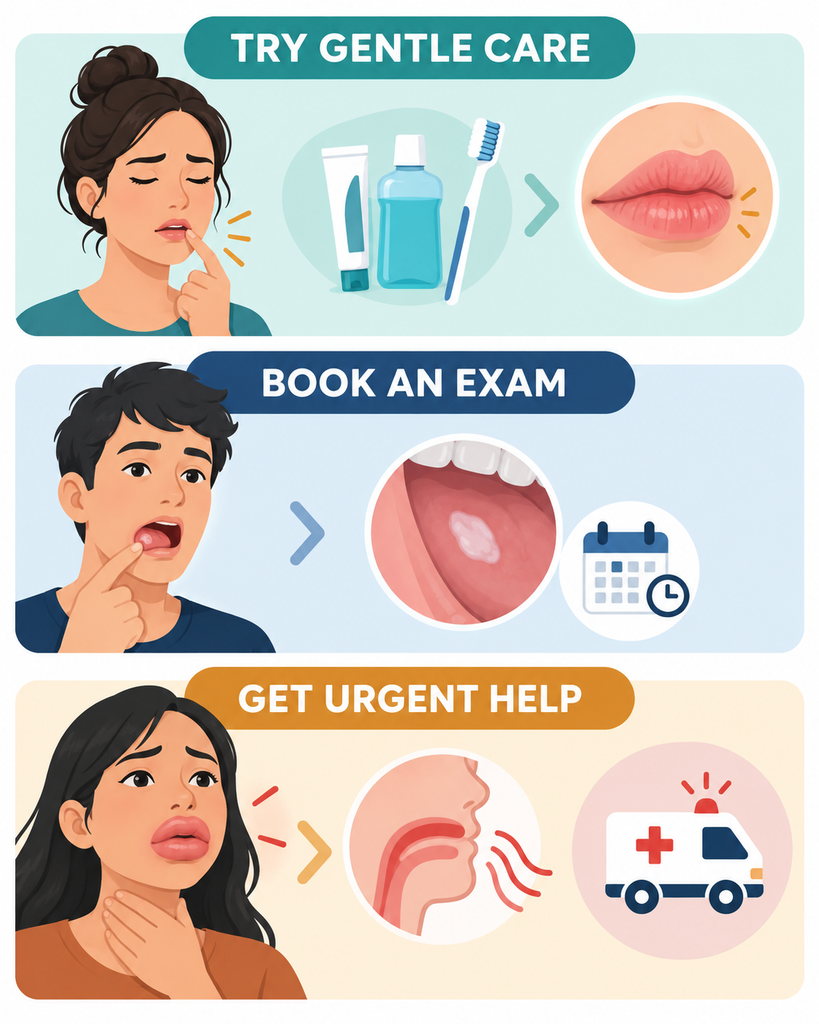
Since most cases of mild irritation are not an emergency, it is still necessary for some symptoms to cause you to change your next course of action. You should make an appointment with a dentist or doctor if the affected area continues for about two weeks, keeps coming back, spreads, becomes more painful, or affects your ability to eat and drink. The dentist will be able to examine the inside of the mouth, the teeth, any dental work, and the way the teeth come together, and if needed, will refer you to an oral medicine specialist or physician.
If you experience difficulty in breathing, swelling of the lips or tongue, trouble swallowing saliva, fast-moving swelling, or any signs of a serious allergic reaction, get urgent medical assistance. For fever, dehydration, a weakened immune system accompanied by new mouth lesions, or severe pain that stops you from drinking, you should seek prompt medical care.
A white patch that does not rub away should not be picked or scraped. The National Cancer Institute lists a persistent mouth sore, a white or red patch, unexplained bleeding, numbness, and trouble swallowing among changes that require evaluation. These findings do not automatically mean cancer, but they should not be self-diagnosed.
How to Stop Skin Peeling Inside Mouth Step by Step
When the peeling is mild and began after a likely irritant, a short “reset” is a reasonable first step. The goal is to reduce chemical exposure and friction while keeping your teeth clean.
1. Pause Newly Introduced Oral Products
Think back over the previous several days. Stop any newly introduced whitening toothpaste, whitening strips, strong mouthwash, breath spray, flavored dental product, or chewing gum that appeared before the peeling. Do not stop a prescribed medicine without speaking with the prescriber, but mention the timing to your dentist, doctor, or pharmacist.
Oral contact reactions can look red, white, swollen, sore, ulcerated, or blistered. The American Academy of Oral Medicine explains that oral hypersensitivity reactions can involve oral-care products, foods, or dental materials, which is why the exposure timeline matters.
2. Switch to a Gentle Fluoride Toothpaste
Choose a plainly flavored fluoride toothpaste without whitening claims or intense cinnamon or mint flavoring. If the problem consistently appears after brushing, you can try an SLS-free fluoride toothpaste and watch whether the tissue improves. Sodium lauryl sulfate, flavorings, and other ingredients may irritate some people, but an ingredient list alone cannot prove an allergy.
Continue brushing twice daily with a soft-bristled toothbrush and light pressure. Avoid aggressive scrubbing of the peeling area because friction can remove healing tissue and prolong soreness.
3. Rinse Gently
Rinse with cool or lukewarm water after meals. A mild saltwater rinse may soothe some mouth irritation, and MedlinePlus recommends salt water or cool water among comfort measures for mouth sores. Spit the rinse out, stop if it stings, and avoid swallowing it.
Do not apply hydrogen peroxide, undiluted essential oils, aspirin, alcohol, or caustic “natural” remedies directly to the mouth lining. These products can produce a chemical burn or make an existing injury worse.
4. Avoid Food and Habits That Reinjure the Area
For several days, choose soft, mild foods and let hot drinks or meals cool before eating. Temporarily avoid spicy, sharply acidic, very salty, crunchy, or hard foods if they sting. Tobacco, vaping, and alcohol can also irritate the mouth and complicate healing, so avoid them.
Try not to pull at loose tissue with your fingers or teeth. If the same strip forms along the bite line, notice whether you chew your cheeks during stress or sleep; a dentist can also check for a sharp tooth edge, rough restoration, or poorly fitting appliance.
5. Address Dry Mouth
Sip water regularly and consider sugar-free gum if chewing is safe for you. The National Institute of Dental and Craniofacial Research recommends water, sugarless gum, and avoiding tobacco and alcohol as practical steps for dry mouth. Persistent dryness deserves attention because medicines, health conditions, mouth breathing, and salivary-gland problems may contribute.
Do not discontinue a medicine simply because dry mouth appears on its side-effect list. Ask the prescriber or pharmacist whether the dose, timing, or an alternative can be considered.
6. Track the Pattern for Seven Days
Take one clear photo in similar lighting each day rather than repeatedly touching the spot. Note when peeling occurs, where it appears, what products you used, what you ate, whether your mouth felt dry, and whether there was pain or burning. Improvement after removing one product is useful information, while no improvement tells you it is time to arrange an examination.

What Causes the Inside of Your Mouth to Peel?
The mouth lining, called the oral mucosa, is thinner and wetter than external skin. When it is irritated, its surface can slough and appear as translucent sheets, white strings, or soft flakes. Appearance alone is not enough to identify the cause, but the timing and location provide useful clues.
| Pattern or clue | Possible explanation | Sensible next step |
|---|---|---|
| Peeling begins after a new toothpaste, rinse, gum, lozenge, or whitening product | Irritant or contact reaction | Stop the new non-prescription product and use a mild routine |
| Peeling follows hot pizza, hot drinks, or harsh chemicals | Thermal or chemical burn | Cool, bland care; seek help if severe or extensive |
| A rough strip forms where the teeth meet the cheek | Cheek biting or repeated friction | Avoid chewing the area and ask a dentist to check the bite |
| Mouth feels sticky or dry and tissue is easily irritated | Reduced saliva | Hydrate and discuss persistent dry mouth with a professional |
| Creamy white patches occur with redness, soreness, or altered taste | Oral thrush is possible | Arrange an exam; antifungal treatment may be needed |
| Lacy white lines, red areas, or recurring painful sores appear | Inflammatory disease such as oral lichen planus is possible | See a dentist, doctor, or oral medicine specialist |
| A thick white patch stays fixed and cannot be wiped away | Leukoplakia or another persistent lesion is possible | Book a prompt dental or medical examination |
Toothpaste, Mouthwash, and Whitening Irritation
Oral care products are often suspected since they come into contact with a large area of mouth tissue each day. The detergents, strong flavourings, alcohol, peroxide and the whitening agents can cause irritation in sensitive mouths, even though different individuals react in different ways to various formulas. If your symptoms get better after making a careful change to the product and come back when the previous product is used again, then you should let your dentist know rather than intentionally restarting the exposure.
Burns, Friction, and Cheek Biting
A hot-food burn usually has a clear beginning and is confined to a particular area, for example the roof of the mouth. Mechanical peeling may be seen repeatedly next to a sharp tooth or along the line where the upper and lower teeth come together. Improvement should occur when the injury ceases, although in the case of a rough dental surface correction is needed instead of simply rinsing.
Dry Mouth
Saliva serves to lubricate and protect the mouth; when saliva levels are low the tissues can become sticky, sore, or susceptible to minor injuries and the risk of developing cavities and infection may also increase. Dry mouth which persists therefore goes beyond being just a matter of comfort and should be mentioned during a dental or medical appointment.

When White or Stringy Material May Be Something Else
White stringy skin inside mouth tissue is often described as peeling, but several conditions can resemble it. Do not scrape hard to “test” a patch because that can cause bleeding and make the area harder to assess.
Oral Thrush
Oral candidiasis, or thrush, can cause white patches on the cheeks, tongue, roof of the mouth, or throat, along with redness, soreness, a cotton-like feeling, taste changes, or pain when swallowing. These are among the mouth and throat candidiasis symptoms described by the Centers for Disease Control and Prevention. Risk is higher with factors such as recent antibiotics, inhaled or systemic steroids, dentures, diabetes, cancer treatment, or a weakened immune system.
Thrush requires an accurate diagnosis because similar-looking conditions need different care. A clinician may prescribe an antifungal medicine when candidiasis is confirmed; leftover antibiotics or random antifungal products are not a safe substitute for an examination.
Oral Lichen Planus
Oral lichen planus may create lacy white patches, red swollen tissue, open sores, burning, or sensitivity to spicy and acidic food. Mayo Clinic’s oral lichen planus overview explains that this immune-related condition is not contagious and needs ongoing professional assessment when symptoms are present. Treatment depends on the form and severity, so it should not be treated as ordinary product irritation.
Leukoplakia and Other Persistent Lesions
Leukoplakia usually appears as a white patch that cannot be scraped away. It is not the same as loose tissue after brushing, and a clinician may need to rule out infection, repeated trauma, precancerous change, or another condition. The safest rule is simple: if a white or red patch stays in place, returns in the same spot, or lasts about two weeks, book an examination.

Can Vitamin Deficiency Cause Skin Peeling Inside Mouth?
Nutrient deficiencies can affect oral health, but peeling by itself does not prove a deficiency. Folate, vitamin B12, iron, and other deficiencies are more often considered when mouth inflammation occurs with a sore or smooth tongue, recurrent ulcers, cracks at the mouth corners, fatigue, pallor, numbness, dietary restriction, malabsorption, or another relevant health history. For example, folate deficiency can inflame the tongue and mouth, but many unrelated conditions can cause similar symptoms.
Avoid taking high-dose supplements based only on a search for “skin peeling inside mouth vitamin deficiency.” A clinician can review your diet and symptoms and order appropriate blood tests if a deficiency is plausible. This approach also reduces the risk of masking one deficiency while missing another condition.
Which Medicine Stops Mouth Peeling?
There is no single mouth medicine for skin peeling inside the mouth since the treatment has to depend on the cause; irritation can be relieved by getting rid of the trigger, candidiasis might need a prescription antifungal, inflammatory disorders may call for a topical medication directed by a clinician, and a rough tooth or dental appliance will have to be corrected. Using the wrong medicine can delay the diagnosis or worsen the irritation of the tissue.
If you are experiencing only temporary discomfort, ask either a pharmacist or a doctor which of the over-the-counter pain remedies is safe given your health conditions and the medications you are currently taking. Do not put an aspirin tablet directly against the gum or cheek, and don’t use a prescription mouthwash or steroid paste that belongs to someone else.
Common Mistakes That Can Delay Healing
The biggest error is to regard all white spots as being caused by thrush. Another mistake is altering more than one product at a time, since this makes it hard to tell which one is the problem. Following a simple and well-recorded routine will provide you and your dentist with better information.
- Pulling or scraping loose tissue repeatedly
- Continuing a new whitening or strong-flavored product despite a clear timing link
- Applying peroxide, aspirin, essential oils, or other concentrated chemicals
- Stopping prescribed medicine without asking the prescriber
- Assuming supplements will fix the problem without evidence of deficiency
- Ignoring a fixed patch, lump, numb area, unexplained bleeding, or swallowing difficulty

What to Tell Your Dentist or Doctor
A brief history will help lead to the correct diagnosis. It is important to bring with you photos together with the packaging or the lists of ingredients of any toothpaste, mouthwash, lozenge, gum, whitening product, denture adhesive, or medicine that you have recently started using. You should also refer to any recent dental treatment, whether or not you have been biting your cheeks, experiences of a dry mouth, any antibiotics you have taken recently, your use of inhaled steroids, any dietary restrictions you may have, and any conditions affecting your immune system.
Find out what the area seems to be, determine whether a product-elimination trial is suitable and when it should be rechecked. On the basis of the results, the professional might suggest a swab, blood tests, an allergy assessment, adjustment of a dental surface, a referral, or a biopsy. It should be noted that a biopsy does not automatically indicate cancer since it is one of the methods specialists use to accurately identify an unexplained lesion.
Frequently Asked Questions
Is it normal for the skin inside your mouth to peel?
It is possible to experience some loose skin following a slight burn or after a short period of product irritation, but repeated or unexplained peeling should not be regarded as normal. If the peeling lasts for approximately two weeks, becomes painful, or reoccurs in the same area, you should get a dental or medical examination.
What is it about the inside of my mouth that is peeling off and turning white?
The white substance could result from mucosal tissue being shed due to the use of toothpaste, mouthwash, whitening products, heat, dryness, or friction; however, creamy patches, lacy lines, or a persistent white patch might be a sign of something different and therefore you should not base a diagnosis solely on colour.
What are safe home remedies for peeling skin inside the mouth?
The first things to do are to get rid of the suspected non-prescription irritant, to gently brush with a mild fluoride toothpaste, to rinse out the mouth with cool or lukewarm water, to keep yourself hydrated, and to eat soft foods. It is necessary to avoid using concentrated peroxide, essential oils, placing aspirin on the tissue, and forcing scraping.
Does having white, stringy skin in the mouth indicate thrush?
It doesn’t have to. While thrush can lead to white patches along with soreness, redness, a changed taste, or a cottony feeling, oral product irritation might also result in stringy shed tissue. Therefore, a clinician should confirm the presence of thrush before you take antifungal medicine.
May vitamin deficiency cause the skin in the mouth to peel?
Oral inflammation may be caused by problems relating to vitamins B12, folate, iron and other nutrients, but peeling on its own is not a reliable indication of a deficiency. It is more appropriate to have tests carried out if you also suffer from fatigue, have a sore or smooth tongue, experience frequent ulcers, have difficulty with eating, feel numbness, are pale, or have a condition which impairs the absorption of nutrients.
What kind of medicine is used to cause the skin inside the mouth to peel?
There isn’t a single remedy that works for all cases; the treatment could consist of eliminating the irritant, adjusting for dental friction, addressing dry mouth, prescribing an antifungal in cases of confirmed thrush, or employing a therapy that is directed by a clinician for an inflammatory condition.
For how long should the mouth peeling cease?
After the trigger has been removed, the minor irritation should start to improve, though the length of time it takes to heal will depend on the cause and how severe it is. However, if there is no obvious improvement after a few days or if the problem continues for around two weeks, you should have a dentist or a healthcare professional look at it.
Conclusion
The best way of stopping the inside of the mouth from peeling is to take a gentle approach: stop using any new irritating products, continue brushing with a mild fluoride toothpaste, rinse out with water, avoid heat and friction, keep hydrated, and monitor the area. Don’t pick at the tissue and don’t assume that every white patch is harmless, indicative of thrush, or due to a vitamin deficiency.
If the problem continues, comes back, or is accompanied by pain, ulcers, a stationary white or red patch, bleeding, numbness, or difficulty in swallowing, you should arrange for a dental or medical examination. Take your photos and the list of ingredients from the product with you so that the professional can work out the cause and suggest a course of treatment appropriate to it.