


How to Shower With Second Skin Without Ruining Your Tattoo
Yes, you can usually take a shower while a fresh tattoo is covered with a properly applied second-skin bandage. The film resists water, but that doesn’t mean you should soak it, scrub it, or aim a powerful stream at it.
If you are learning how to shower with second skin, the basic rule is simple: keep the shower brief and lukewarm, protect the adhesive edges, and check the seal afterward. Water on the outside of an intact bandage is normally fine. Water underneath it means the barrier has been compromised.
Second-skin products and artists do not all use the same wear schedule. Follow the instructions from your tattoo artist and the manufacturer of the exact film on your skin, especially if their advice differs from the general guidance in this article.
Important: This article offers general tattoo-care information and is not a substitute for advice from your tattoo artist or a medical professional. Seek medical care if you develop spreading redness, worsening pain, pus, fever, chills, or another concerning reaction.
What Is Second Skin for Tattoos?
“Second skin” is a common name for a thin, transparent adhesive film placed over a fresh tattoo. Products in this category create a protective barrier while allowing some moisture vapor and oxygen exchange.
Unlike household plastic wrap, tattoo film adheres around the tattoo and stays in place for a defined period. Brand instructions vary, which matters because “Second Skin,” Saniderm, Derm Shield, and Dermalize may be used casually as interchangeable terms even though their application and wear guidance can differ.
A small pocket of ink-colored fluid under the film can be normal during the first day. It is often a mixture of plasma, a little blood, and excess ink. Do not puncture or drain the pocket because making a hole destroys the sealed barrier. Skin discoloration does not always mean an allergic reaction. StoryPrior’s guide to stopping jewelry from turning your skin green explains how harmless surface staining differs from itching, blistering, and other signs of contact dermatitis.
Can You Shower With Second Skin on a Tattoo?
You can shower with Second Skin on a tattoo if the film is fully attached and the tattoo stays sealed. The manufacturer’s Saniderm tattoo-healing guidance says the bandage is waterproof and can be worn during a normal shower, but warns that excessively warm water can weaken the adhesive.
Shower-safe does not mean soak-safe. Avoid baths, swimming pools, hot tubs, lakes, and any situation that submerges the bandage. Prolonged water exposure can weaken the edges, and contaminated water becomes a concern if the seal opens.
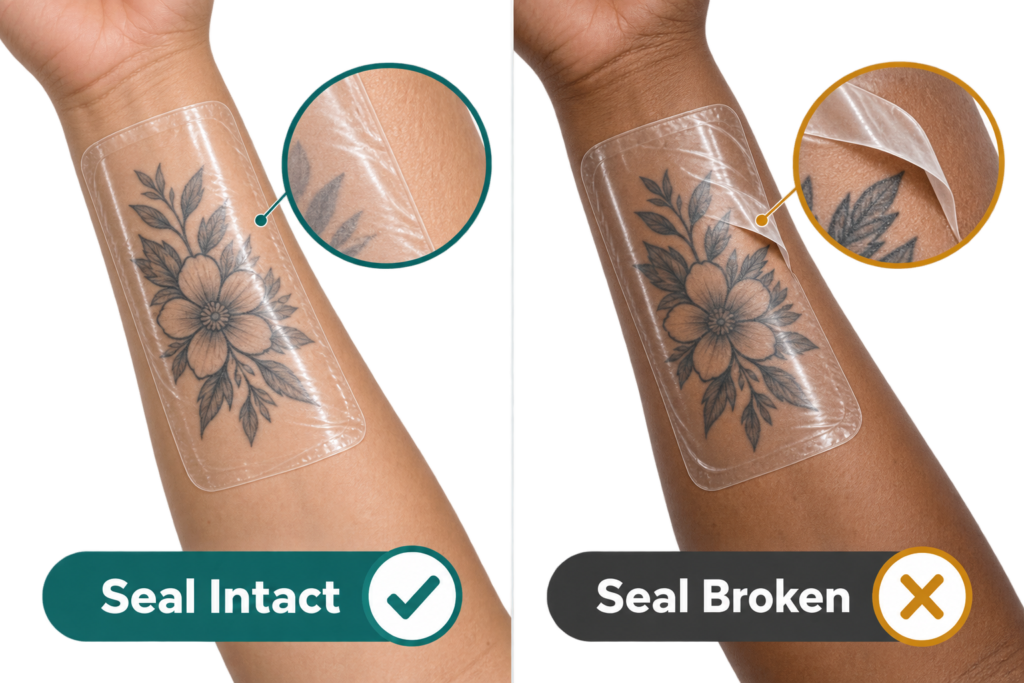
Before showering, look closely at the entire perimeter. If the film is already leaking, has an open channel to the tattoo, or has peeled far enough to expose part of the inked area, postpone the shower and contact your artist for advice.
How to Shower With Second Skin Step by Step
There is no need to cover the second skin with an extra layer of plastic since additional wrapping can trap moisture, cause the film to shift, and make it harder to spot a failed seal.
1. Before switching on the water, check the bandage
- Ensure that the tattoo lies entirely within the adhesive border; although a crease or a small air bubble is not in itself a problem, it is important that no open pathway links the tattoo to the outer edge.
- Check for loose corners, fluid leaking out, a crack in the film, or redness that appears along the edge of the adhesive. In the event that the film is damaged or your skin reacts to it, do not use it as a protective barrier.
2. Use lukewarm water
It is better to use water that is comfortably warm or only slightly cool rather than having a hot, steamy shower, since heat can cause the adhesive to soften, increase skin sensitivity, and make the edges of the film lift.
Don’t stay in the shower too long. Although there isn’t a one-minute limit applicable to all products, now is not the time for a lengthy rinse or for the bathroom to be filled with steam.
3. Do not put direct pressure on the tattoo.
Whenever possible, turn the tattoo away from the showerhead and have the water run softly over or around the area rather than aiming a focused spray at the bandage.
It is particularly important in the case of a tattoo located on the shoulder, upper back, chest, or on some other part that usually faces the water, since strong pressure can have an effect at the edge even if the film had appeared secure before the shower.
4. Do not wash the film through it but around it.
Clear the rest of your body as you usually do, but don’t rub the film with a washcloth, loofah, brush, or exfoliating glove. Avoid attempting to wash the tattoo through the bandage.
Make sure that shampoo, conditioner, body wash, and scented products don’t accumulate at the edges of the container; if foam ends up on the outside, gently rinse it off without rubbing.
5. Pat the outside dry
After the shower, use a clean towel to pat the surrounding skin and the outside of the film. Do not drag the towel across the bandage because the fabric can catch an edge and pull it upward.
Give the adhesive border a moment to air-dry. Avoid using a hair dryer, heater, or other concentrated heat source on the fresh tattoo.
6. Inspect the seal again
Check for a new lifted edge, a water channel, leaking fluid, or a change in the pocket beneath the film. If everything remains sealed and your skin feels comfortable, leave the bandage alone according to your artist’s schedule.
If water gets under the film, the bandage no longer provides a dependable barrier. The next section explains what to do.

What If Water Gets Under the Second Skin?
Remove the bandage if shower water, soap, or shampoo has clearly entered beneath it. Do not press the water out, puncture the film, or tape over the leak. Those shortcuts do not restore a clean, sealed barrier.
Wash your hands first. Then remove the film using the method recommended for the product, gently clean the tattoo with lukewarm water and a mild fragrance-free cleanser, and pat it dry with a clean disposable paper towel. The Dermalize application and removal instructions also emphasize careful washing and gentle drying when you remove the film.
Whether you should apply a fresh sheet depends on the product, timing, skin condition, and your artist’s protocol. Use a new piece only if your artist or the product instructions tell you to. Never put the used film back on, and never cover a tattoo that is dirty, damp, irritated, or showing possible infection.
What if only the corner is lifting?
A lifted corner is not always an emergency if a wide adhesive margin still surrounds the tattoo and no channel reaches the inked skin. Do not peel it back to investigate, because that can turn a minor lift into a broken seal.
If the lift reaches the tattoo, fluid leaks out, or water can travel underneath, treat the seal as compromised. Ask your artist whether to remove the film and switch to open aftercare or replace it with a new sterile sheet.
What if fluid is pooling beneath the film?
A modest ink-colored fluid pocket can be expected early in healing. The manufacturer’s wear-time guidance for Saniderm recommends changing the initial film within its specified window and removing or replacing it sooner if heavy weeping weakens the adhesion.
Do not confuse tattoo fluid with outside shower water. Tattoo fluid begins over the inked area and may look dark or reddish, while outside water may appear clearer and often follows a lifted edge. If you cannot tell, send a clear photo to your tattoo artist instead of guessing.

Should I Wash My Tattoo With Second Skin On?
No. Just wash the outside of the bandage by running gentle water over it; do not scrub the bandage, work the soap into it, or pull up an edge in order to wash underneath.
When you are deliberately removing or altering the film, you should wash the tattoo itself in accordance with the aftercare instructions you have been given. It is safer to use clean hands, lukewarm water, a mild fragrance-free cleanser, and gently pat the area than to rub it vigorously or use a cloth towel that has been shared.
You should avoid using alcohol, hydrogen peroxide, harsh exfoliants, soaps with a strong fragrance, and various antibiotic ointments unless a medical professional specifically advises you to do so. Products that are irritating or too occlusive may hinder the healing process or cause a skin reaction.
How to Remove Second Skin in the Shower
The shower can make removal easier when it is time to take the bandage off. Saniderm’s instructions recommend using warm running water and slowly pulling the film back over itself rather than lifting it straight up from the skin.
Start at an edge and stretch or roll the film low and parallel to the skin, following the product instructions. Move slowly in the direction of hair growth. Stop if you feel sharp pain, see skin lifting, or are unsure how the film was applied, and contact your artist.
Once it is off, wash the tattoo gently and pat it dry. Do not reapply a used sheet, and do not apply moisturizer or a new dressing until the tattoo is clean and fully dry, unless your chosen aftercare method calls for it.

Shower Mistakes That Can Break the Seal
Most problems come from weakening the adhesive border or treating water resistance as permission to soak. Avoid these common mistakes:
- Taking a long, hot, steamy shower
- Aiming a high-pressure stream directly at the tattoo
- Scrubbing the film or its edges
- Letting shampoo or body wash sit along the adhesive
- Pulling, trimming, or puncturing a fluid pocket
- Drying with a rubbing motion
- Taping over a leak instead of following proper removal guidance
- Swimming, bathing, or using a hot tub while the tattoo is healing
Sweat and friction can also loosen a film, especially over joints or under tight clothing. Inspect the seal after exercise and follow your artist’s advice about when to resume strenuous activity.
When to Remove the Bandage and Get Help
Remove the film and contact your tattoo artist if water gets underneath, the tattoo becomes exposed, fluid leaks out, or the adhesive causes significant itching, burning, blistering, or a spreading rash. Mild redness and tenderness can occur after tattooing, but symptoms should generally improve rather than intensify.
The American Academy of Dermatology’s tattoo reaction guidance identifies worsening or spreading redness, increasing pain, pus, open sores, fever, and chills as signs that need prompt medical attention. Seek urgent care for breathing difficulty, chest tightness, dizziness, widespread hives, intense swelling, or another serious allergic reaction.
Contamination is not limited to the shower or studio equipment. The FDA’s tattoo-safety information notes that tattoo inks can sometimes contain microorganisms even when a container is sealed, so a tattoo that is not healing normally deserves professional assessment.

Quick Shower Checklist
Use this short check before and after every shower while the film is on:
| Check | What to do |
|---|---|
| Seal | Confirm the tattoo is completely enclosed before showering. |
| Temperature | Use lukewarm water and limit steam. |
| Pressure | Turn the tattoo away from the showerhead. |
| Cleaning | Wash around the film without scrubbing it. |
| Drying | Pat gently with a clean towel and air-dry the edges. |
| Final check | Look for lifting, leaks, irritation, or water underneath. |
If the film remains flat, sealed, and comfortable, continue following the prescribed wear schedule. If anything seems wrong, a quick photo and message to your artist is more useful than an improvised repair.
FAQs
Is it safe for second skin to get wet?
Yes, the exterior of an unbroken waterproof tattoo film can become wet when someone has a short shower. If water gets beneath the film or the seal breaks, it should be removed following the instructions given by both your product’s manufacturer and your artist since the protective barrier is then no longer reliable.
Yes, can I take a shower with the second skin on my tattoo on the same day?
Yes, generally, provided that the artist states the bandage can stay on and all the edges are securely sealed. Shower for a short time using lukewarm water, avoid applying direct pressure, and then check the film.
Should I wash my tattoo if I’ve put on second skin?
No, don’t attempt to wash the tattoo through or underneath the film. Instead, gently wash the tattoo only when you are removing or replacing the bandage as part of your aftercare plan.
For how long should I leave the second skin on after getting a tattoo?
There is no one single wear time that suits all films or tattoos; you should adhere to both your artist’s recommendations and the instructions that come with the product, and if the seal is broken, water gets in, the tattoo becomes exposed, or you experience considerable irritation, it should be removed earlier.
What are the steps I should take if the second skin comes off after I have had a shower?
Make sure that the lifted area provides an open route to the tattoo; if it does, or if the tattoo is exposed or leaking, then you should get in touch with your artist and carry out the correct removal and cleaning steps instead of pressing the old film back down.
May I take a bath or swim with second skin?
Not at all—a shower only momentarily exposes the tattoo, whereas a bath, pool, hot tub, lake, or ocean would soak the bandage and make it more likely that the seal will fail. You should wait until the tattoo has healed and until your tattoo artist tells you that immersion is safe.
What will happen if shampoo runs over the second skin?
Rinse the outside carefully and check that none of the product has got underneath any edge. If shampoo or soapy water is caught under the film, then the seal is defective, and you should take off the bandage and carry out your aftercare instructions.
Conclusion
The way to shower with a second-skin effect is all about keeping the seal intact. Use lukewarm water, keep the shower short, avoid the direct spray and rubbing, pat the film dry, and then check all the edges when you’ve finished.
If water gets underneath or the tattoo becomes exposed, do not patch the old film or hope it reseals. Follow the manufacturer’s instructions and contact your tattoo artist for the next step. Save this checklist for your first few showers, and seek medical advice promptly if healing symptoms worsen instead of improving.